









Intranet adoption: how to get employees on board with a new intranet



11 mins read
The benefits of using an intranet software at work are clear. Intranets improve internal communication, team collaboration, employee engagement, teamwork and productivity.
While the advantages seem to be clear still 40% of intranets fail to deliver a ROI because of inadequate adoption. Failure of intranet adoption is frequently caused by a lack of consideration for employee needs and missing intranet education, followed by unengaged executives and an unclear purpose.
How to get employees to use an intranet?
So how to overcome the root causes of intranet failure? How to encourage intranet adoption? Intranet adoption will not happen by itself. Organizations need a rollout plan and management needs to prioritize the intranet adoption process. Here are a few tips for your intranet adoption strategy and how to get your team on board with the new intranet software - from the C-Suite to project teams.
6 tips for an intranet adoption strategy
1. Getting management on board with intranet adoption
The first step in getting company-wide buy-in is getting your C-Suite on board. This group is crucial to have on your side for the intranet adoption process not just because they have a big say in company management, but because employees will follow their lead.
Want to improve your business with an intranet?
Watch video
Employees look to management as an example. As Hannah Price at CMS Wire puts it, “If the CEO is still sending internal reply-all emails rather than using the intranet’s chat feature, or storing files on a hard drive rather than the intranet system, others will do the same.” If your C-Suite uses the intranet from day one, employees will follow suite, which results in a company-wide intranet adoption. So, how do you make this happen?
2. Present the hard facts of intranet use
To get C-Suite buy-in, you need to consult them and convince them before implementation begins. They should be involved in all of the intranet planning and strategy meetings. But you will need to start with a pitch. What executive management wants to see first is hard facts and data to support your claim. You need to prove to them that this will be worth their investment.
There are tons of statistics out there that support and validate the success and ROI you will see from implementing an intranet system. For example, McKinsey researches social technology in the workplace, and has found that “using social technologies to improve collaboration and communication within and across companies could raise the productivity of interaction workers by 20 to 25 percent.” This statistic comes complete with a graph that explains how they quantified that number.
Another report from IDC shows that information workers spend a lot of time on finding and processing information - and on very high costs:
- Email: 13 hours per week (cost: $21,000 per year)
- Searching for information: 9 hours per week (cost: $14,000 per year)
- Analyzing information: 8 hours per week (cost: $13,000 per year)
- Communicating / collaborating with colleagues: 6.5 hours per week (cost: $10,000 per year)
- Creating content: 6 hours per week (cost: $10,000 per year)
- Publishing information: 4 hours per week (cost: $6,000 per year)
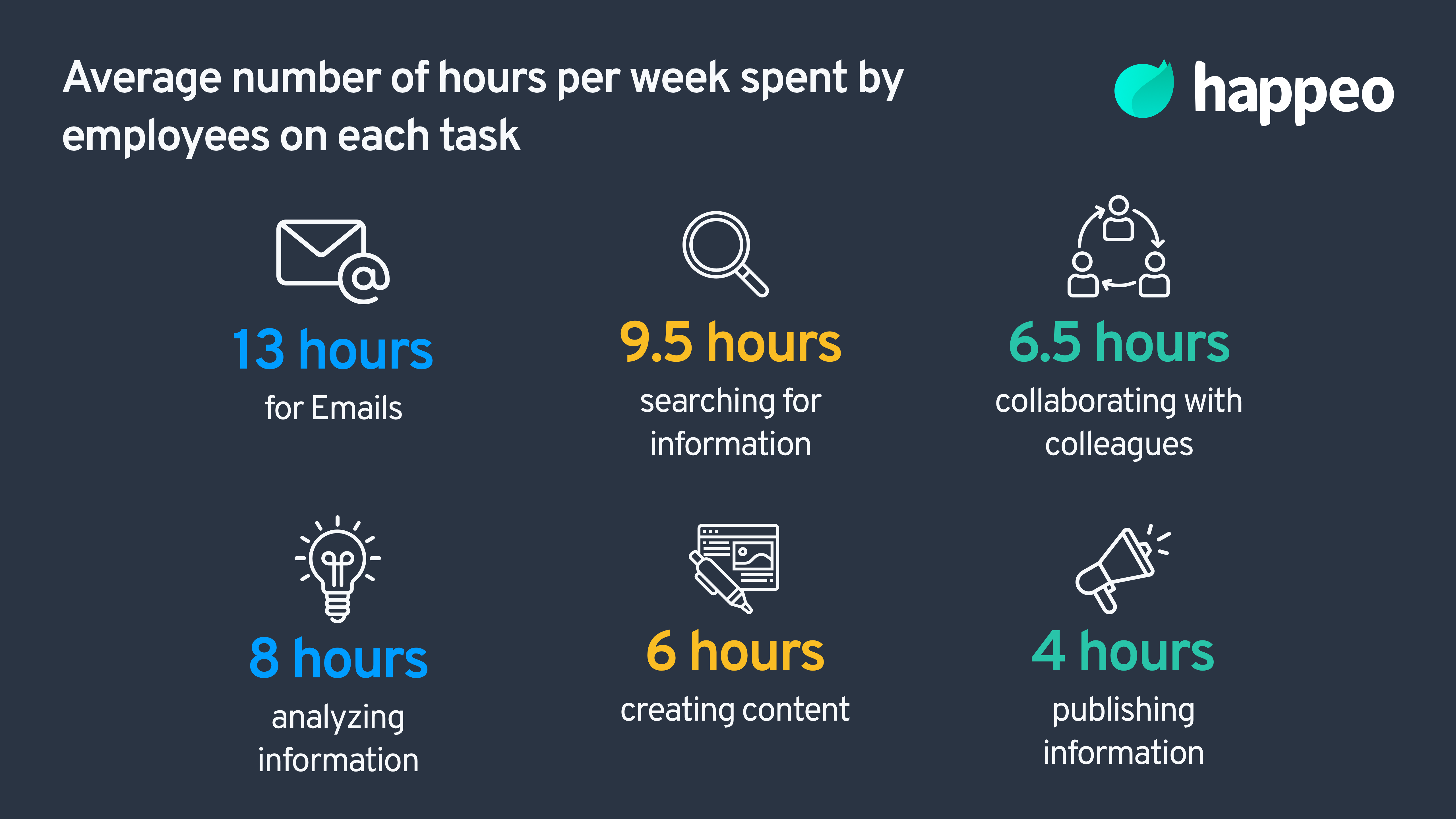
The report concludes that employee productivity will rise and profits will soar, when companies make it easier to find information. According to them a social intranet software is the recommended tool to drive employee productivity.
In short, do your research and come up with some statistics to win your C-Suite over. Make sure to tailor these statistics to your specific company by including numbers that will show how intranets can improve internal issues.
3. Present stories and explain the benefits and features of intranets for employee experience
After ‘wowing’ your C-Suite with numbers and statistics, it’s time to show them how implementing an intranet system will actually transform your workplace.
At its core, intranet systems are user-centric and are aimed at increasing the employee experience in the workplace. When you have engaged employees, you have a powerful workforce that will carry out the goals and vision of your company. So after you give the hard number facts that show monetary value, it’s time to go and show them how workplace culture and employee satisfaction will improve as well.
While numbers can be flashy, there is actually a current trend away from quantifiable intranet KPI statistics to more qualitative data that measures intranet success through the lens of the employee experience. There are many intranet features that will empower employees and help them get the job done, such as:
- Full access to company data and documents
- Mobile intranet apps
- Streamlined and relevant content
- Collaborative group work spaces
- Two-way instant communication
- Social features
- Full employee profiles
- Integration with other tools
Get some feedback from your employees on the state of your current internal communications (we recommend an intranet needs analysis), share those stories, and then present to your C-Suite how an intranet system can provide a solution. This backs up all of your statistics with human experience and value and shows how an intranet adoption can be a holistic solution. And if your executives can’t seem to relate, you can explain the relationship between improved employee experience and increase in customer satisfaction being published by companies like Forbes to grab their attention.
Discover all the features of an intranet software
Download list
4. Go over a rough implementation plan
After getting your executives on board through your amazing pitch, make sure to lay out your implementation plan for them and go over how intranet use will address and solve each issue you’ve seen in your company’s communication. Go over the rough, step-by-step plan for implementation, but make sure they know they can and will have a say in the process. Plan for follow-ups with them and continued conversations. Remember, you need them to go beyond just believing in your plan to getting them to be advocates and avid intranet users. Let them know they are integral in every aspect of this intranet adoption process.
Once the leadership team is on board, it’s time to take it to the masses.
Before you actually launch your intranet, you need to prepare your staff for the change to ensure a smooth adoption process. You should clearly communicate your intention to implement an intranet with your entire staff, get their feedback and include their voice in the solution, and hold trainings so they can use the intranet software confidently.
5. Setting up for intranet adoption success
Communication is the first step toward getting your team on board and prepared for change. As soon as C-Suite is on board and you get the go-ahead, you need to start communicating with employees exactly what is going to happen so they can get excited. As previously stated, employees need to feel that they have a voice and are involved in the process.
When communicating the intranet adoption plan, include some statistics you found in your intranet needs analysis employee survey of employee dissatisfaction and how you will be addressing that through the intranet solution. Show them the results of what they said they wanted from an intranet system, and then show them how you are responding to that feedback.
You want to answer employees’ questions for “how” and “why” this solution before you implement the intranet system.
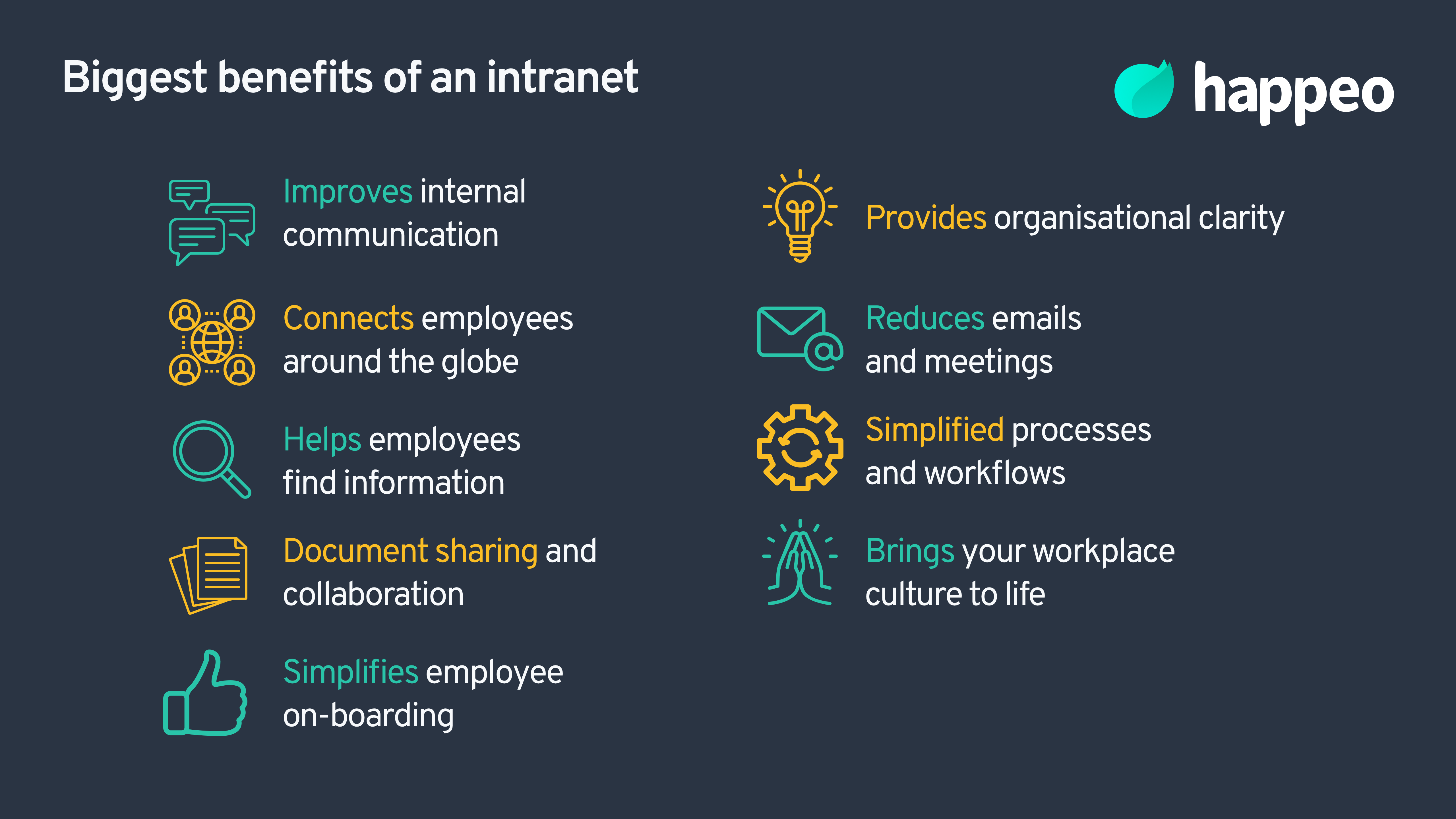
Employees will want to know what are the advantages of an intranet and what’s in it for them, so coming up with a big picture company future for employees to grasp a hold of that lays out how intranet use will directly benefit their day-to-day work will get them excited about the possibilities that an intranet provides. It’s also beneficial to pinpoint some intranet champions from the get-go. Which employees can help rally the troops and guide you through the adoption process?
Then, make sure to train, train, and train again! Hold meetings to discuss the upcoming change, answer as many questions and concerns as possible, and then begin the training process. Provide short, effective trainings for the entire staff to go over the general workings of the intranet, to set up expectations, and to get used to the UI. And keep training, even after implementation!
6. After the intranet roll-out
You did everything to prepare for intranet implementation, and now it’s time to make sure the intranet adoption process sticks. There are potential barriers to intranet adoption:
Organizational (internal structure and procedures)
- Inability to work across the enterprise silos
- Fear of replacing a legacy system
- Lack of budgeting
- Unorganized customer and business data
Workforce (internal employees and human resources)
- Employee resistance
- Internal management capabilities
- Lack of skills or knowledge
External (outside forces beyond your enterprise)
- Security
- Client or stakeholder backlash
- Navigating vendors and solutions
Because of possible barriers, it’s important to view your intranet adoption as a holistic process and an internal cultural shift, not just the latest technology. Explain to employees the shift that is going to occur and guide them through it. They now have full access to information and full communication capabilities with all staff, so the workplace hierarchy will be dissipated and staff will be unified. Employees will be empowered by these tools, and the success of the intranet system is in their hands.
You can help employees ease into this process and keep them interested by releasing new functions on a roll-out basis, and make it fun with competitions or rewards. Continue to get feedback and make changes or adaptations when necessary to show your employees that they have a voice in this system and are ultimately in charge. Also be sure to set up intranet management teams that will be in charge of monitoring content to make sure it is relevant and user-focused, and so employees can have a point-person for questions or concerns.
Sustaining intranet use: tips for a social solution
After the initial implementation and intranet adoption occurs, you will want to set up processes to make sure everything sticks and doesn’t fizzle out over time. You want a sustainable, long-term solution for your business. Here are some ways you can encourage continued intranet use:
- Make it essential
Remember when you got your management on board? It is crucial for them to maintain consistent intranet use. If company managers are using the intranet to assign tasks, relate information, and deliver content, employees will be forced to log on. Make essential business processes only available through the intranet portal, as well as essential business documents and information that will help employees. - Keep content relevant and engaging
Make sure your intranet content is interesting and useful to employees, as well as visually appealing and dynamic. You can also share the responsibility of content throughout the organization so every department is represented and intranet users are continually logging on to create their content. This way, you know that employees are seeing what they want to see, because they are the ones creating it. - Rely on social features
There are many social features built-in to an intranet that will lend themselves to getting your employees on the intranet system. Instant chatting, commenting, sharing, liking, @mentions, topic tags, and forum subscriptions will notify employees when they are personally called-out in the intranet, which will likely lead them to log in and see what’s happening. Take advantage of these social aspects and add in fun features like non-work related quizzes or purely social group forums to keep them engaged.
Even when you put these ideas into practice, you will still most likely face a range of potential intranet challenges. But, what’s important to remember when facing challenges is that they can be overcome. If you prepare for, identify, and communicate these intranet challenges with your team, you will find solutions and ways to address them together.
Want to see how Happeo helps your business?
Book a demo
Communicating the advantages of intranet use
Getting buy-in for intranet adoption is all about focusing on the benefits of intranets for the team, the individual, the manager, and the company at large. This is fairly easy to focus on as the advantages of an intranet solution are plentiful.
Because intranet success is determined by the user, it is designed to be user-centric and friendly. Take time to assess the issues or needs of each department, or type of employee you have, and find a way to specifically address that in your pitch. If you can communicate intranet advantages to users and how they will personally benefit no matter their position, they are going to buy-in to the solution.
Frequently Asked Questions
Why do so many intranet adoptions fail?
About 40% of intranets fail to deliver ROI due to poor adoption, usually caused by a lack of consideration for employee needs, insufficient training, unengaged executives, and an unclear purpose.
Why is executive buy-in so important for intranet adoption?
Employees follow leadership's example, so when the C-Suite actively uses the intranet from day one instead of falling back on email or shared drives, employees are far more likely to adopt it company-wide.
What helps employees actually adopt a new intranet?
Employees adopt an intranet when they're involved early through feedback and needs analysis, given clear training, and shown how the tool directly benefits their day-to-day work rather than just being told to use it.
How can organizations sustain intranet adoption after launch?
Organizations sustain adoption by making the intranet essential for core business processes, keeping content relevant and regularly updated, and leveraging social features like comments and mentions to keep employees engaged.
