There’s one thing that has helped employees perform at their best. It’s not the new onboarding program. It’s not unlimited PTO. It’s not treats in the break room, ping pong tables, or happy hours with coworkers. All those things are great and can have their place, but the desire employees have to be happy at work comes down to one thing–if they feel heard and valued. And it’s the ability to have an employee voice that Gallup says leads employees to be 4.6x more likely to perform at their best.
It may feel difficult for some to believe. That’s it? Just let employees have a voice? Not exactly. Employees need to be encouraged to have a voice and also heard when it’s exercised. So let’s talk about why employee voice is so important, and how to build an environment of true collaboration and listening.
Start with the "Why": Connecting Employee Voice to Business Success
The first, and most crucial, step in encouraging employee voice is defining its purpose. It's about understanding "why do we want employee voice and what are our ultimate business goals with employee voice?"
- Strategic Imperative, Not Just a Perk
Employee voice is a powerful business lever. When employees feel safe and empowered to share their perspectives, they offer invaluable early warning signals about potential issues and identify hidden opportunities. This directly impacts critical business outcomes, such as retaining top talent by addressing concerns before they escalate. Organizations that actively listen to their employees are 4.5x more likely to be high-growth firms and report higher innovation rates, according to research by Deloitte.
- What's in It for Everyone?
Just as the business needs a "why," so does the individual employee. It’s important to embed this expectation from day one: "Part of every single job in this company is to help us break down silos. Part of every single job in this company is to help us capture unique knowledge." When contributing to knowledge management and collaboration is framed as a fundamental expectation, it empowers employees to participate without feeling it's an extra burden.
Cultivating Collective Pride: Every Team Has a Story
Beyond individual contributions, recognizing the power of "team voice" is essential. Every department, from IT to sales, has vital stories to tell about their work, challenges, and triumphs.
- Breaking Down Silos with Shared Success
Often, insights into incredible work happening in one corner of the business remain siloed. Encouraging teams to openly share their achievements and learning fosters a profound sense of collective pride and spirit. This cross-functional visibility not only boosts morale but also sparks collaboration and innovation. A Gallup study found that employees who feel connected to their organization's mission are 3.7 times more likely to be engaged.
- Beyond Go-to-Market Narratives
Limiting internal communication to only sales and marketing means missing out on the rich tapestry of expertise that defines an organization. Whether it’s an IT team's technical advancement or a finance team's efficiency gains, these "short, quick hits" remind employees that they are part of an elite group working toward common goals.
Leaders as Architects of Engagement: Modeling, Listening, and Humanizing
The journey to a truly vocal organization hinges on leadership. Leaders aren't just strategists; they are powerful role models whose actions profoundly shape culture.
- Modeling the Way Digitally
It's not enough for leaders to say employee voice is important; they must actively participate and share their own voices on internal platforms. This means showing up, making posts, and engaging with content. While leaders have countless demands on their time, emphasizing that even "two minutes a week" of visible digital presence can move the needle is crucial. Research by McKinsey suggests that visible leadership commitment is a top driver of successful organizational change.
- Teaching Digital Listening
Active listening in a digital space requires a different skill set than in-person meetings. Leaders need coaching on where to focus their limited time and how to engage meaningfully. Project teams can act as "concierges," curating relevant content for leaders to review or suggesting opportunities to comment. This direct guidance helps leaders build the habit of digital engagement and shows that their digital presence is a valued expectation.
- Humanizing the Digital HQ
In an increasingly digital-first workplace, human presence is key to making platforms attractive. This goes beyond formal announcements. Simple welcome videos from senior leadership or quick, bi-annual updates from technical leaders inject personality and approachability into the digital space. Showcasing employee testimonials on benefits pages or sharing "quotables" from different teammates further humanizes the site. This human touch is especially vital in an age where AI might handle many interactions; finding genuine human voices can foster a deeper sense of connection and belonging.
Sparking Participation: Casual, Fun, and Planted Engagement
Once the foundation of trust and visible leadership is in place, leaders can employ practical tactics to spark and sustain employee engagement, ensuring a vibrant, active digital HQ.
- Lowering the Bar for Initial Contributions: Encourage "casual contributions" to help employees overcome the initial hurdle of sharing their voice. A highly successful strategy is having new hires introduce themselves in a designated channel, answering a few simple, personal questions. This low-stakes interaction builds comfort and confidence, making them more likely to contribute work-related content later. It's a "warm-up exercise" for broader engagement, recognizing that participation needs consistent nurturing.
- Injecting Fun and Unexpected Elements: Internal communications don't always need to be serious. Injecting fun and informal elements can dramatically boost engagement. For example, adding polls to recruitment posts ("Who last encouraged you to look at a new role?") or incorporating surprising, informal mascots (like a company's pet in a tech update) can make mandatory information more memorable and enjoyable, increasing overall engagement without compromising professionalism. It's about making content more "memorable" and "surprising" to cut through information fatigue.
- "Planting Participation" for Momentum: It's okay to initiate engagement strategically to get the ball rolling. "Planting participation" involves discreetly asking trusted colleagues or senior leaders to be the first to comment on a new post to generate initial traction. People are significantly more likely to like or react to something or comment on it if it's already been activated. This technique leverages social proof and digital presence, signaling to others that the conversation is active and that their participation is part of a collective effort, reducing the intimidation of being the first to engage.
The Outcome? A Living, Breathing Digital HQ
Encouraging employee voice isn't a one-time project; it's an ongoing commitment that transforms your digital HQ into a living, breathing hub of insight and connection. When you:
- thoughtfully define your "why," clearly articulating employee benefits
- champion every team's story
- model desired behaviors from the top
- humanize your platforms with authentic presence, and
- spark engagement with deliberate, even playful tactics
Then, leaders can build a workplace where every voice is heard, valued, and contributes to the collective success. This isn't just about better communication; it's about building a more resilient, innovative, and truly engaged organization.
How Happeo can help
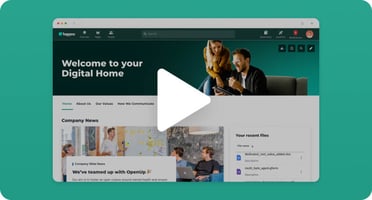
Ready to transform your workplace into a hub of innovation and collaboration? Happeo is more than just an intranet—it's a powerful platform designed to capture and amplify employee voice across the entire organization, top down and across all teams.
With Happeo, you can build a culture where every team's story is heard, every insight is valued, and every employee is empowered to contribute to your company's success.
Reach out to us if you’d like a customized demo.