








Happeo Unmuted Episode 6: Tools, Trust, and the Future of Internal Comms


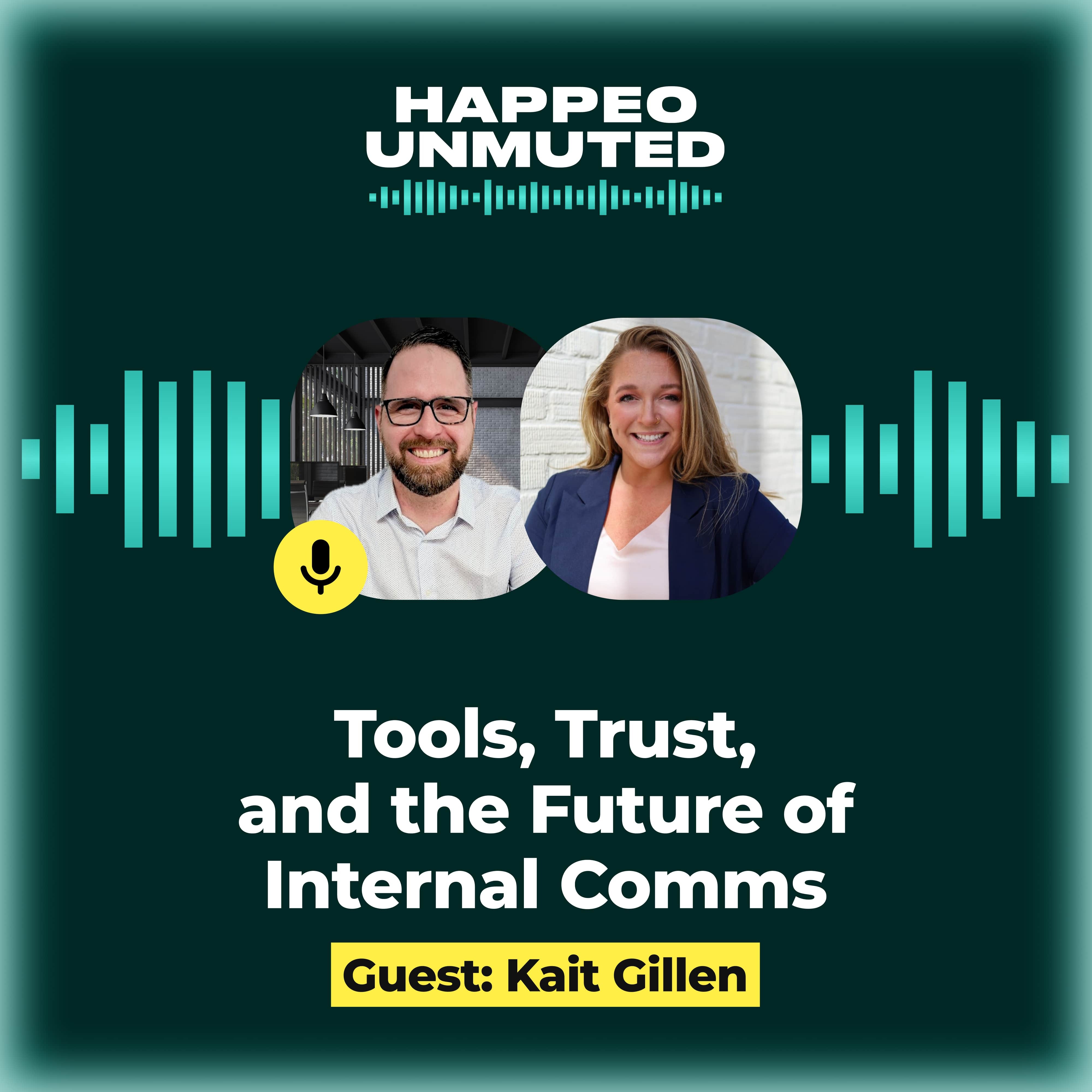
Welcome to Happeo Unmuted, the podcast where we go beyond best practices to explore what really connects people at work. In this episode, Jesse Bourgeault-Trickey sits down with Kait Gillen to discuss common misconceptions, getting a seat at the table, and the challenges that come with overlapping tools.
1. Tools can’t fix culture, but they can facilitate it
Kait emphasizes that culture is fundamentally intangible—it’s the shared stories, experiences, and narratives that form the “fabric” of an organization. While technology platforms can help facilitate communication and engagement, they cannot create culture from scratch or fundamentally change it. The effectiveness of tools depends on how they’re implemented, and without thoughtful use, they can even harm culture by creating misalignment or confusion. Tools are enablers, not replacements, for intentional culture-building practices.
2. Simplicity and focus beat feature overload
Kait notes that many platforms today offer an overwhelming array of overlapping features—HR systems that handle rewards, swag platforms that manage recognition, and knowledge tools that attempt to do everything. This can lead to confusion over which tool should be used for what purpose and reduce adoption. Her advice is to focus on doing a few things exceptionally well, rather than trying to cover every possible use case. Strong governance and clarity on scope are essential for efficiency, adoption, and preventing redundancy.
3. Employee experience is a force multiplier
Kait frames employee experience as more than just perks or “nice-to-have” initiatives. She argues that it directly contributes to a strong, healthy culture and amplifies the impact of other strategic initiatives, similar to how diversity, equity, and inclusion act as force multipliers. Businesses often deprioritize employee experience during challenging times, but doing so diminishes engagement, inclusivity, and overall effectiveness. Investing in experience creates an environment where employees can thrive, which in turn drives better business outcomes.
4. Clear communication is an act of kindness
One of Kait’s guiding principles is “clear is kind.” She stresses that communicators must intentionally craft messages that are understandable to all stakeholders, especially non-communicators. This involves distilling complex strategies, peeling back jargon, and ensuring that messaging is actionable and accessible. Clear communication reduces confusion, fosters alignment, and builds trust, while also helping leaders send intentional signals to employees about priorities, values, and expectations.
5. Every action sends a signal
Kait reminds us that every decision, policy, or communication sends signals to employees—whether intended or not. She encourages leaders and communicators to step back and examine the broader implications of their actions: What does this policy signal about the organization’s priorities? Does this communication reinforce the culture we want to build? By being intentional about the signals they send, leaders can ensure alignment between strategy, culture, and employee perception, avoiding unintended messages that might undermine trust or engagement.
.jpg)
