For decades, “search” has been the cornerstone of how we find information. We type in a few keywords, hit enter, and hope the right results appear somewhere on Page 1. For a long time, this worked. Search helped us navigate an increasingly digital world. It gave us instant access to information. And it made sense when company knowledge was stored in predictable and few places like folders, wikis, and shared drives.
But today, the way we work — and the way knowledge lives — has changed in its entirety.
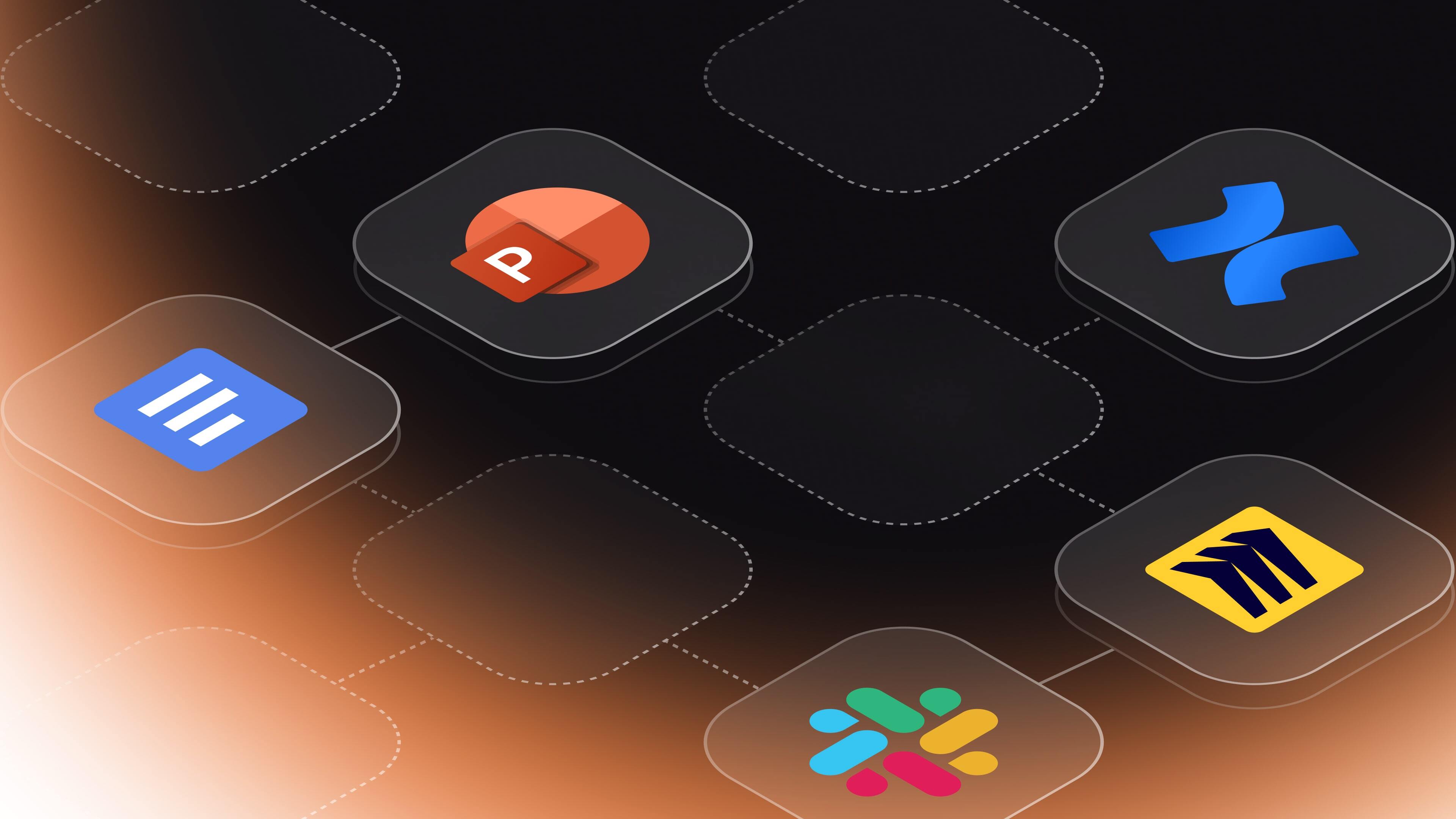
Information doesn’t live in a handful of systems anymore. It’s scattered across dozens: Google Drive, Slack, Confluence, Notion, email, Jira, Asana and intranets that employees rarely visit. And while our tools have grown exponentially, our ability to find what we need hasn’t kept up.
That’s why traditional search is breaking down. It’s rigid, reactive, and blind to context. It depends on you knowing exactly what you’re looking for, and in most cases, you don’t.
But now, we have Search AI, the next evolution of search: an intelligent, context-aware way of connecting people to the knowledge they need, even before they know what to ask. It moves beyond keywords to understand intent and meaning across your organization’s collective knowledge.
This article will break down the issues with traditional search, the new type of search emerging with AI, and how Happeo's Search AI can help your organization get better access to your knowledge.
The Problem with Traditional Search: It’s Built For Yesterday’s Work
Traditional search is designed for static information and simple queries. It also assumes three things that are no longer true:
1. That you know what you’re looking for
The reality is that keywords aren’t always enough anymore. We don’t always know what we are looking for. In fact, we often start with uncertainty: we don’t know the file name or owner, just a vague memory that this content exists, somewhere.
2. That information lives in one place
Today, information is fragmented. Searching Drive for information that lives in Slack won’t return what you need. And conducting search queries across platforms is timely, even with all the right keywords.
3. That knowledge is static
In reality, it’s dynamic, evolving, and contextual. Documents labeled ‘final’ remain so up until the next product release, policy update, or organizational change.
The mismatch between how search works and how knowledge behaves creates friction. Employees waste time searching, redoing work or asking around for answers that should be easily referenceable. According to McKinsey, the average employee spends up to 20% of their work week searching for internal information. In other words, one full day — gone.
But it’s not just a productivity issue, it's also knowledge equity issue. When only some people know where the info is (likely those longest at the org or more technologically in-tune), the same voices dominate, and expertise remains siloed.
Why Knowing What To Ask Is the Real Barrier
Search starts with a question — but most of the time, we don’t even know how to ask the right one. For instance, let’s say you’re new to a company and you want to understand the travel expense process. You type “travel policy” in your intranet search bar. You get 25 results. Some outdated, some duplicated, some linked to Google Docs you don’t have permission to access.
Or you search “expenses” and get a mix of files: “Expense_2021_Final_v3,” “Travel Reimbursement Template,” “Finance Q&A.” None of them answer your real question: How do I submit my travel expenses now? Search retrieved information. But it didn’t deliver knowledge.
You end up asking in Slack. Someone points you to the right place. Eventually, you find it — but the time, context-switching, and frustration add up. Multiply that by every employee, every day, and it becomes a systemic problem.
Traditional search forces us to think like machines. Smart search allows the machine to think more like us.
A New Type of Search
A smart search doesn’t need you to present a perfect query. It understands you beyond the language you use and takes into account context. Instead of showing you 25 documents that contain the words “travel” and “cost”, a smart search engine like Happeo’s Search AI interprets your intent: “this person wants the company’s current travel policy”. It finds the latest approved document, the owner in Finance, and even recent discussions that clarify common edge cases. If it’s sophisticated, it may even identify and flag where information may be outdated.
That’s the shift from information retrieval to knowledge intelligence. Smart search understands relationships between content: who wrote what and how information connects. You may not remember the title to the onboarding guide, but smart search knows that “how to set up my laptop” is part of onboarding.
Traditional search asks ‘what do you want’, whereas smart search asks ‘what are you trying to do’?
The Role of AI in the Evolution Search
AI has made this evolution possible. Through natural language processing, machine learning, and semantic understanding, AI can recognize that ‘vacation policy’, ‘PTO guidelines’, and ‘time off rules’ all refer to the same concept. It can learn from how employees interact with content, refining results based on what’s relevant or up-to-date.
AI can also bridge disconnected systems. Your company knowledge doesn’t live in a single platform, so AI search doesn’t pretend it does. Instead of hallucinating, it pulls insights from across your digital ecosystem and presents them as a unified, contextualized answer.
The Cultural Impact
Technology is only half the story. A smart search also changes the culture of knowledge. When access to information is democratized, access to expertise and other information begins to flow. It’s no longer trapped in personal folders or departmental silos. Everyone can access the collective intelligence of the company. This shift has a profound impact on inclusion, onboarding, and innovation.
New hires ramp up faster because they can find answers without knowing who to ask. Remote employees feel more connected because context isn’t hidden in hallway conversations.
Teams make decisions faster because they’re drawing from the same, trusted source of truth. Knowledge flow becomes cultural infrastructure, and smart search is the engine that powers it.
The Future of Work Demands Smarter Systems
As organizations rush to embrace AI, hybrid work, and constant change, the ability to access and activate knowledge becomes a competitive advantage. In reality, we don’t need faster search bars, we need smarter systems that understand people. Smart search turns your organization’s scattered data into usable knowledge. It eliminates friction, connects people to expertise, and makes decisions faster, communication clearer, and collaboration facilitated.
It’s how knowledge hubs become truly intelligent: by turning information chaos into knowledge clarity.
The next chapter: introducing Happeo’s Search AI
At Happeo, we understand this shift. Our mission has always been to connect people to knowledge, but what that means is evolving fast. That’s why we built Happeo’s Search AI: to move beyond retrieval and towards intelligent discovery.
Search AI understands intent instead of just keywords. It interprets context, connects information across your entire tool stack, and delivers answers instead of just documents. It’s the intelligence layer powering our Knowledge Engine — unifying your company’s collective knowledge and making it accessible to every employee… no matter where that information lives.
If your employees are stuck in the scavenger hunt, it’s time for a better way. Happeo’s Knowledge Engine helps unify your tech stack into a single, intelligent experience. Learn more about how Happeo reduces knowledge fragmentation here, or book a call.