Artificial intelligence promises a lot: faster insights, better decision-making, personalized experiences, and even automated knowledge work. But there’s a hard truth that every organization needs to confront: AI is only as good as the data it consumes.
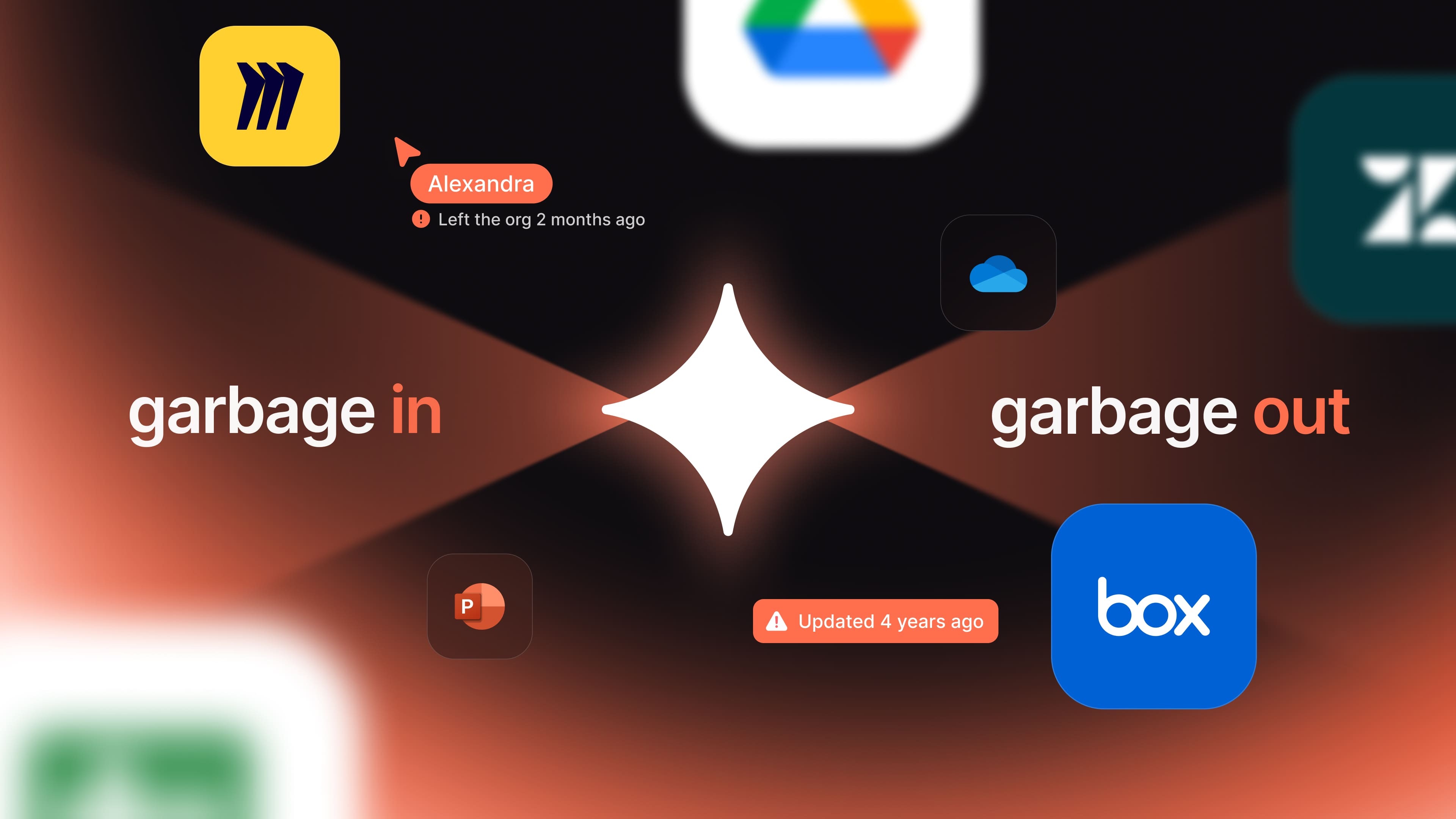
If your knowledge base is messy, incomplete, outdated, or inconsistent, AI doesn’t magically fix it, but instead, amplifies every flaw. What would otherwise be minor friction points in your digital workplace suddenly become amplified problems with AI. In other words: garage in, garbage out is a pervasive issue in the AI era.
Let’s explore why this happens, what hidden issues it exposes, and how organizations can prepare their knowledge infrastructure for reliable, intelligent AI.
AI Amplifies the Hidden Problems Most Companies Already Have
Modern workplaces face a complex web of knowledge challenges. Many are invisible until AI interacts with the system, at which point the results are glaring. Here are the key problems AI tend to magnify:
1. Scattered knowledge
Most organizations rely on multiple tools like intranets, chat apps, file servers, project management tools that rarely, if ever, talk to each other. If AI tries to draw insights across fragmented systems, it risks conflicting information, missed context, and recommendations that are incomplete or misleading. AI assumes it “knows” the truth, but if the truth is scattered, the outputs will be fractured too.
2. Tacit knowledge isn’t captured
Critical processes, rules, and insights often live in people’s heads. When AI tries to answer questions or suggest solutions, it will fail in areas where knowledge hasn’t been documented. The result is inaccurate guidance, incomplete recommendations, and frustrated employees,
3. Information hoarding and siloed content
Departments or individuals may keep knowledge private, intentionally or not. AI systems pulling from restricted or siloed repositories can give partial answers, miss key stakeholders, and propagate outdated assumptions. The more content is hoarded, the worse the AI becomes at delivering trustworthy insights.
4. Untrusted or inconsistent information
Outdated files, conflicting policies, and incomplete documents can trick AI into producing wrong outputs. If employees already don’t trust the content, AI amplifies that mistrust, delivering responses that may seem authoritative but are fundamentally flawed.
5. No ownership or governance
Without clear SMEs, approval processes, or content reviews, AI will happily reference content that is stale or plain wrong. When nobody “owns” accuracy, AI can rub rampant in reinforcing errors and inconsistencies across teams.
6. UX friction and poor content structure
AI relies on structured, discoverable, and searchable data. If metadata is missing, taxonomy is inconsistent, or content is hard to navigate, the AI’s ability to surface meaningful results declines. This can create a cycle where employees stop trusting both the AI and the underlying system.
7. Analytics gaps
Many organizations have no visibility into what employees actually need or what searches fail. AI will attempt to fill these gaps, but without accurate signals, it’s essentially guessing — amplifying existing gaps instead of solving them.
The search problem that isn’t really a search problem
When employees can’t find what they need, the instinctive response is “we need better search”. It’s understandable. Search feels like a bottleneck. Employees waste time hunting for documents, Slack conversations go unanswered, and meetings get derailed by basic “where can i find…” questions.
So companies invest in search tools. Tools like Glean have built their business around making enterprise search work more like Google. And that can be valuable. Finding information quickly is better than finding it slowly.
But this is what most organizations miss: companies think they have a search problem when they actually have a knowledge management problem. Better search can’t find what doesn’t exist. It can’t verify what’s outdated, and it can’t trust what hasn’t been governed.
Search-only tools focus on retrieval speed across your tech-stack. But if that document is three years old, contradicts another document, or was never reviewed by anyone who knows the answer, you’ve just efficiently delivered the wrong information.
You’re still wasting time, and worse, you might make decisions based on the incorrect information without realizing it. The bottleneck wasn’t search speed, it’s knowledge quality.
This is the fundamental distinction between finding things and verifying truths. Search gets you to an answer. Knowledge management ensures that answers are correct, current, and trustworthy. When AI enters the picture, this distinction becomes critical, because AI will confidently surface whatever it finds, regardless of whether it’s right.
How Garbage In, Garbage Out Manifests in AI
In practice, garbage in garbage out in AI looks like:
- Chatbots giving incomplete or incorrect information
- AI content suggestions reinforcing outdated processes
- Search engines surfacing irrelevant or contradictory documents
- Automated workflows failing because missing context wasn’t documented
Every hidden issue you’ve ignored (or missed) — poor governance, siloed knowledge, missing content, or inconsistent metadata — becomes amplified when AI tries to “do its job”.
The irony: organizations adopt AI to solve knowledge gaps, but AI will highlight and worsen those gaps unless the underlying content foundation is solid.
Why garbage in, garbage out is a knowledge problem
AI is a mirror. It reflects the strengths and weaknesses of your existing knowledge ecosystem. If your content is incomplete, outdated, siloed, poorly structured, and owned by nobody, then AI can’t magically generate wisdom. Instead, it amplifies hidden inefficiencies, outdated information, and friction points, often at scale.
This is why AI adoption can sometimes feel messy or even dangerous: it exposes the cracks your teams have been tolerating. And this is why better search alone won’t solve it.
The solution: fix the foundation before you build the house
To avoid garbage in garbage out, organizations need to treat AI as a knowledge-dependent tool, not a magic fix. That means:
1. Consolidate and connect knowledge
Bring content together from scattered tools, channels, and departments. Reduce silos and make sure AI has a complete view.
2. Capture tacit knowledge
Encourage documentation of processes, policies, and workflows, Convert tribal knowledge into structured content accessible to AI.
3. Establish governance and ownership
Assign SMEs, create approval workflows, and define review cycles. Ensure AI references content that is accurate, up-to-date, and trusted.
4. Structured content for discoverability
Use metadata, taxonomy, and categorization so AI can reliably parse and surface information.
5. Track analytics and identify gaps
Monitor failed searches, frequently asked questions, and missing documents. Fix gaps before AI attempts to answer queries on incomplete data.
6. Embed a feedback loop
AI can help identify gaps if you set up mechanisms for it to report where information is missing or incomplete. Treat AI as a partner in knowledge improvement, not just a tool for automation.
7. Detect and close knowledge gaps proactively
Move beyond reactive fixes. Use systems that actively identify where documentation is missing, outdated, or contradictory, and route those gaps to the right people to close them. This shifts the focus from finding things to verifying truths.
Why this matters for organizations today
AI adoption is accelerating. Chatbots, AI content suggestions, smart search, and automated workflows are increasingly embedded in the workplace. But garbage in garbage out is not hypothetical: it’s real, visible, and costly.
Left unchecked, it can;
- Erode trust in both AI and your knowledge systems
- Amplify misinformation or outdated guidance
- Increase workload rather than reduce it
- Create a false sense of security around decision-making
Conversely, organizations that fix the foundation first see AI become a truth accelerator that amplifies accuracy, discoverability, efficiency, and productivity instead of errors.
A strategic approach: AI and knowledge gap detection
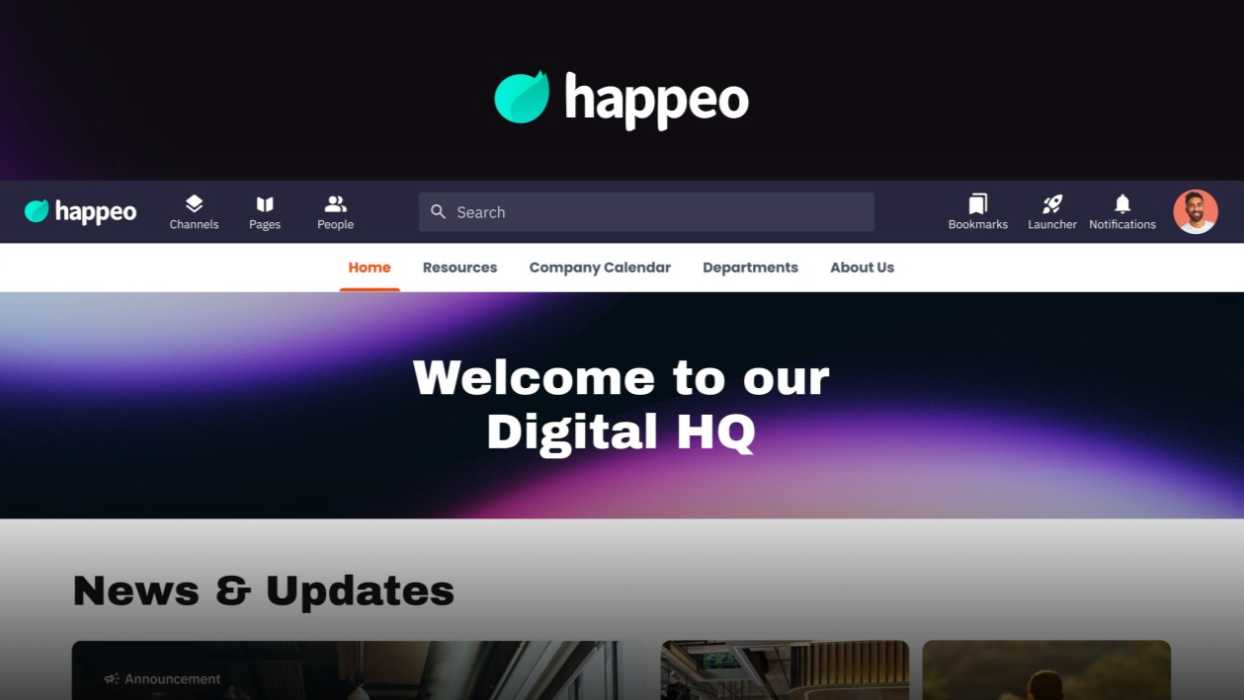
Tools like Happeo’s Knowledge Gap Detector can help organizations address the garbage in garbage out issue before it seeps into their AI.
By cleaning up your knowledge ecosystem proactively, AI can finally deliver the value it promises: smarter insights, faster answers, and better employee experiences.
Final thoughts
AI is powerful, but it isn’t magic. It’s a mirror of your organization’s knowledge ecosystem. If your content is messy, siloed, outdated, or ungoverned, AI will amplify those problems. If search results aren’t trustworthy, you’ve just accelerated failure. The first step to harnessing AI effectively is to clean and govern your knowledge. Only then does AI become a true partner by transforming your work instead of magnifying inefficiencies.
That's why we built Happeo. It helps your organization bring your official information in better shape without massive overhaul projects, guiding teams from the current chaos to verified and trustworthy information so that AI finally has something solid to work with.