







Employee Experience Platforms in 2026



Admin
22 mins read
Employee experience platforms
An employee experience platform (EXP) is an integrated digital layer that connects communication, collaboration, HR processes, feedback, and learning across the entire employee journey. Unlike point solutions that handle just surveys or just recognition, an EXP functions as the daily home base where employees access news, tools, knowledge, and colleagues. Think of it as the front door to work itself.
Modern organizations juggle dozens of disconnected tools—HRIS for payroll, separate apps for chat, email, file storage, surveys, and learning. Employees waste hours each week switching between them, searching for information, or simply figuring out where to go next. Employee experience platforms solve this by sitting on top of existing tools like HRIS and productivity suites (Google Workspace, Microsoft 365) and surfacing personalized, role-based experiences in one place.
Cloud-based platforms like Happeo, Workvivo, Microsoft Viva, and LumApps are typical examples of experience platforms leading the market in 2026. They combine the utility of a traditional intranet with the engagement features employees now expect from consumer apps.
What you will learn:
- What makes employee experience platforms different from intranets and HR systems
- The core features every EXP should offer
- Top benefits of a holistic approach to employee experience
- 20+ leading platforms profiled with their strengths and use cases
- How to choose the right platform for your organization
- Future trends shaping EX technology through AI and beyond
- How to measure the impact and ROI of your investment
What is an employee experience platform?
An employee experience platform is a unified digital workspace that brings communications, knowledge, collaboration, support, and feedback into one place. It sits above your existing systems—HRIS, ITSM, CRM, document repositories, and chat tools—and orchestrates them into a coherent experience rather than a maze of disconnected apps.
Unlike standalone tools that address single pain points (a survey tool for employee sentiment, a recognition app for peer appreciation, a wiki for knowledge management), an EXP is designed as the environment where employees spend their working day. It centralizes the touchpoints that matter most: company news, team updates, policies, onboarding resources, people directories, and quick access to the applications employees need.
The goal is straightforward: make work simpler and more engaging by reducing friction. When an employee can find answers fast, complete tasks in fewer steps, and feel connected to colleagues and leadership, both employee satisfaction and productivity improve.
Here are the main capabilities that define a modern EXP:
-
Communication hub: Centralized news, leadership updates, and targeted announcements that reach the right people at the right time
-
Knowledge portal: Structured pages for policies, how-to guides, FAQs, and team resources with powerful search
-
Social and collaboration features: Channels, comments, reactions, and communities that encourage participation
-
Feedback and listening tools: Surveys, pulse checks, and integrations with analytics platforms
-
Recognition and culture: Peer shout-outs, badges, and celebration features tied to company values
-
Analytics: Dashboards showing content engagement, reach, and employee insights
How employee experience platforms differ from intranets and HR systems
The terms often get conflated, but employee experience platforms, intranets, and HR systems serve distinct purposes. Understanding the differences helps you build a coherent stack rather than duplicating functionality or leaving gaps.
Classic intranets emerged as document repositories and one-way broadcast channels. They stored policies, org charts, and news—but interaction was minimal. Employees visited to find a form, then left. Content often became stale, and engagement was an afterthought.
HCM and HRIS tools (Workday, SAP SuccessFactors, BambooHR) are systems of record. They manage payroll, benefits administration, contracts, and compliance. They excel at structured HR data but are not designed for daily communication, knowledge discovery, or cultural engagement.
Employee experience platforms are systems of engagement. They combine the information architecture of an intranet with the social features of consumer apps, the personalization of modern SaaS, and the analytics that HR teams need to understand how employees feel and what they need.
Here’s a simple way to think about it:
Intranet = information hub (static content, document storage)
HRIS = system of record (employee data, payroll, compliance)
EXP = system of engagement (communication, community, experience)
The three are complementary. An EXP doesn’t replace your HRIS—it sits in front of it, pulling relevant data (role, location, start date) to personalize what each employee sees.
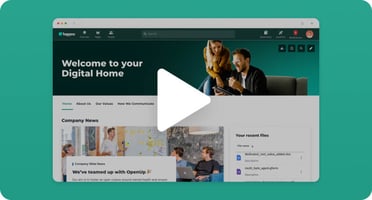
A concrete example with Happeo: Happeo integrates deeply with Google Workspace, allowing employees to surface Drive files, Calendar events, and people profiles directly inside channels and pages. Instead of switching to Gmail, then Drive, then a separate wiki, employees access everything from a single digital workplace. The platform becomes the front door they open before email or chat.
Many organizations now structure their EXP this way: the first thing employees see when starting their day, replacing scattered browser tabs with a unified experience.
Key differences at a glance:
- Intranets focus on publishing; EXPs focus on engaging
- HRIS tracks employee data; EXPs activate it for personalization
- Intranets are admin-driven; EXPs encourage bottom-up contributions
- HRIS handles compliance workflows; EXPs handle communication workflows
Core features every employee experience platform should offer
When evaluating employee experience platforms, use this as a checklist. Each feature should serve a clear purpose: reducing friction, improving engagement, or providing the real time insights your HR and comms teams need.
Internal communications hub: A news feed, channels, and targeted announcements that replace mass emails and keep remote, hybrid, and frontline teams aligned. Look for audience targeting by role, location, and language so employees see what matters to them.
Pages and knowledge management: Easy-to-build pages for policies, how-to guides, onboarding hubs, and team spaces. Version control and content governance prevent outdated information from confusing employees.
Enterprise search: Unified search across intranet content, people directory, documents, and integrated tools (like Google Drive or SharePoint). Employees should find answers in seconds, not minutes.
People directory and org chart: Rich profiles with skills, location, and reporting lines. Discovering colleagues and subject-matter experts should be effortless, especially in large or distributed organizations.
Social and collaboration features: Comments, reactions, @mentions, and groups that encourage participation. These transform a static portal into a living community where employees ability to connect and contribute is valued.
Feedback and engagement tools: Pulse surveys, polls, and quick sentiment checks. Some platforms include native survey tools; others integrate with specialists like Culture Amp or Qualtrics for deeper engagement insights.
Recognition and culture features: Peer recognition, shout-outs, badges, or integrated rewards that reinforce values. Consistent appreciation builds a positive work environment and keeps engaged employees motivated.
Personalization and targeting: Content segmentation by role, location, language, business unit, and seniority. Personalization prevents information overload and ensures relevance.
Mobile apps and responsive design: Full-featured access on iOS and Android for deskless and frontline workers. If half your workforce can’t access the platform from a job site or retail floor, it’s not an EXP—it’s a desk-worker tool.
Analytics and reporting: Dashboards showing reach, engagement, search behavior, and channel performance. These guide comms and HR strategy with actionable insights rather than guesswork.
Integrations and SSO: Plug-and-play connectors with identity providers (Okta, Azure AD), HR systems, chat tools (Slack, Teams), and productivity suites. Seamless authentication and data flow reduce friction.
Security and compliance: Role-based access, audit logs, and data residency options suitable for mid-sized and large organizations in regulated industries. Enterprise grade security is non-negotiable.
Top benefits of a holistic employee experience platform
Features only matter if they deliver outcomes. Here’s what organizations actually gain when they adopt a well-implemented employee experience platform.
Higher engagement and retention
When employees can easily find information, feel connected to leadership, and receive continuous feedback and recognition, employee retention improves. Since 2023, organizations have faced tighter labor markets and rising expectations from workers. Platforms that support transparency, recognition tools, and two-way communication show measurable gains in eNPS and reduced turnover. Highly engaged employees stay longer and contribute more.
Better productivity and fewer app switches
The average enterprise employee uses over a dozen apps daily. Each switch costs time and mental energy. An employee experience platform helps by centralizing documents, tools, and people in one hub. Employees spend less time asking “where is that thing?” and more time doing meaningful work. The productivity gains compound quickly across a large workforce.
Stronger company culture in remote and hybrid teams
Distributed teams miss the hallway conversations and spontaneous connections of office life. Channels, social features, and video updates in an EXP help replicate that cohesion digitally. Leadership can share strategy, recognize achievements publicly, and invite questions—making remote workers feel as included as those in headquarters. This is how you build workplace culture across time zones.
Faster onboarding and internal mobility
New hires ramp up faster when they have a dedicated onboarding hub with checklists, training resources, and introductions to their team. Role-based pages surface exactly what’s relevant. And when employees look for internal opportunities, a good EXP makes career paths and open roles visible, supporting professional growth and reducing attrition.
Improved alignment during change
Mergers, reorganizations, and strategic shifts demand clear communication with measurable reach. An EXP gives leaders visibility into who’s read critical updates, which regions show lower engagement, and where confusion persists. This supports data driven decisions during the moments that matter most for organizational success.
Richer data for HR and comms
Analytics on content engagement, search terms, and participation provide early signals of confusion, disengagement, or knowledge gaps. If employees keep searching for “expense policy” and failing, you know the content needs improvement. If a region’s engagement drops, you can investigate before turnover spikes. These employee insights inform smarter decisions.
Lower IT and support overhead
Consolidating multiple legacy portals and manual newsletter workflows into one cloud platform simplifies governance and maintenance. IT spends less time managing outdated SharePoint sites, and comms teams stop manually compiling email lists. The administrative burden shrinks while reach expands.
Key outcomes summarized:
- Reduced turnover and higher employee satisfaction
- Measurable productivity gains from fewer app switches
- Stronger culture and alignment across distributed teams
- Faster time-to-productivity for new hires
- Better data for proactive HR and comms decisions
20+ best employee experience platforms in 2026
This curated list covers leading platforms grouped by primary strength: digital workplace, feedback and analytics, recognition, performance, and holistic EX. It’s not a ranking—your best choice depends on priorities, existing tools, and budget.
Use this guide to shortlist tools quickly. Each profile highlights who it’s for, standout features, and typical use cases.
Happeo
Happeo is a knowledge management intranet built for small and medium-sized companies that have outgrown Drive, email, and chat as their primary way of storing and sharing company knowledge. It gives organizations one structured, searchable, verified place for everything employees need to know — policies, processes, onboarding, team resources, and company updates.
Best for: Organizations experiencing information chaos — where knowledge is scattered across Drive folders, email threads, Slack messages, and people's heads — who need one official, governed home for company knowledge. Works with both Google Workspace and Microsoft 365.
Standout features:
- AI-powered Knowledge Engine and Search, built on Gemini and Happeo's own proprietary AI, delivering permission-aware results across Happeo, Google Drive, Gmail, Slack, and Microsoft 365
- Structured Pages for building and maintaining evergreen knowledge — policies, handbooks, onboarding guides, department hubs
- Governance tools including automated content expiry reminders, orphaned content detection, and page ownership workflows to keep knowledge accurate over time
- Channels for structured internal updates and announcements, with scheduled posting and targeted distribution
- Deep integration with both Google Workspace (Gmail, Drive, Calendar) and Microsoft 365 (Outlook, OneDrive, SharePoint, Teams)
- Analytics focused on knowledge health — what's being searched, what's not being found, and what content needs updating
- Mobile apps for iOS and Android
Typical use cases: Replacing fragmented Drive/email/Slack knowledge with a structured, searchable intranet; onboarding new employees with a single guided resource hub; keeping policies and processes accurate and discoverable; giving distributed teams one place to find trusted company information
Note: Happeo is a knowledge management intranet, not an internal communications or employee engagement platform. Communication happens as a natural byproduct of well-organized knowledge — but Happeo doesn't build features with comms or engagement as the primary goal. Organizations looking for recognition programs, pulse surveys, or multi-channel broadcast messaging will need a separate tool for that layer. Happeo pairs well with engagement and listening platforms as the knowledge foundation of a complete EX stack.
CultureMonkey
CultureMonkey is an employee feedback and experience analytics platform built for modern HR professionals and people leaders.
Best for: Organizations that already have a digital workplace but need deeper employee engagement measurement
Standout features: Pulse surveys, lifecycle surveys, anonymity controls, driver analysis to uncover engagement trends
Typical use cases: Continuous listening programs, understanding engagement by team or demographic, turning survey data into manager coaching
Note: Pairs well with an intranet or digital workplace for a complete EX stack
HubEngage
HubEngage is a employee communications, engagement, and workforce operations platform built to improve employee experience.
Best for: Organizations that need a multi-channel employee communications and engagement platform, particularly those with frontline, deskless, or distributed workforces
Standout features: Multi-channel messaging (push, SMS, email, Teams, Slack, WhatsApp), employee recognition and gamification, pulse surveys, AI chatbot, modular architecture that allows phased adoption
Typical use cases: Company-wide announcements across multiple channels, recognition and rewards programs, employee engagement measurement, frontline workforce communications
Note: HubEngage is an employee engagement and communications platform, not a knowledge management intranet — making it a different category from Happeo rather than a direct replacement. Organizations sometimes evaluate both together as complementary layers of an EX stack.
Workday Peakon
Workday Peakon is a continuous listening platform tightly integrated with the Workday HCM suite.
Best for: Large enterprises standardizing on Workday
Standout features: Real-time feedback capture, AI-powered recommendations, risk detection for burnout and attrition, demographic segmentation
Typical use cases: Enterprise-wide engagement surveys, manager enablement with actionable insights, predictive analytics for retention
Note: Strong choice for Workday customers wanting native integration
Workleap (Officevibe)
Workleap Officevibe is an approachable engagement and feedback tool for small and mid-sized companies.Best for: Organizations starting their employee experience journey or wanting lightweight engagement tools
Standout features: Quick pulse surveys, eNPS tracking, team-level insights, simple and intuitive interface
Typical use cases: Weekly or monthly engagement checks, manager-level visibility into team sentiment, building a feedback culture
Note: Less complex than enterprise suites, making adoption fast
Motivosity
Motivosity is a recognition-focused employee experience solution centered on peer-to-peer appreciation.Best for: Organizations wanting to build everyday recognition into their culture
Standout features: Micro-bonuses, public recognition feeds, social recognition tied to company values, gratitude tracking
Typical use cases: Encouraging frequent peer recognition, reinforcing values through daily appreciation, complementing annual awards programs
Note: Pairs well with an intranet or digital workplace for broader EX coverage
Connecteam
Connecteam is an all-in-one app for frontline and deskless workers, combining communication, scheduling, and task management.
Best for: Retail, logistics, field services, and operational teams outside the office
Standout features: Strong mobile experience, time tracking, checklists, shift scheduling, in-app communication
Typical use cases: Reaching non-desk employees, managing shift-based workforces, mobile-first internal comms
Note: Functions as an employee experience platform specifically for operational teams
Confetti
Confetti focuses on virtual and in-person team experiences such as events, games, and celebrations.
Best for: HR and managers looking to strengthen culture through curated experiences
Standout features: Event marketplace, facilitated team experiences, easy booking for remote and hybrid teams
Typical use cases: Team building, milestone celebrations, onboarding events, virtual holiday parties
Note: Complements rather than replaces a core EXP or intranet
PerformYard
PerformYard is a performance management platform aligning feedback, reviews, and goals.
Best for: Organizations needing consistent performance processes and goal alignment
Standout features: Structured performance reviews, continuous feedback, goal tracking, customizable review cycles
Typical use cases: Annual and quarterly reviews, OKR tracking, manager-employee 1:1s, development plans
Note: Works as an EX enabler when paired with communication and recognition tools
Nectar
Nectar is a recognition and rewards platform designed for distributed teams.
Best for: Companies with multiple offices or remote-first workforces wanting unified recognition
Standout features: Peer recognition, points-based rewards, custom company swag catalogs, Slack and Teams integrations
Typical use cases: Building culture across locations, celebrating achievements, rewarding performance with tangible gifts
Note: Lightweight and easy to adopt alongside existing tools
ThriveSparrow
ThriveSparrow is a newer employee experience platform combining surveys, engagement analytics, and goal tracking.
Best for: Companies wanting real-time employee sentiment plus lightweight performance tools
Standout features: Modern UI, at-a-glance dashboards, engagement surveys, goal management
Typical use cases: Ongoing sentiment tracking, goal alignment, HR analytics
Note: Good option for organizations seeking a fresh alternative to legacy tools
Workvivo
Workvivo (owned by Zoom since 2023) is a social intranet and employee experience platform built around community and communication.
Best for: Organizations aligned with Zoom and Microsoft ecosystems seeking a social-first experience
Standout features: Activity feeds, podcasts, recognition walls, strong mobile apps, integrations with Zoom
Typical use cases: Creating a digital HQ, unifying dispersed workforces, leadership communication, culture building
Note: Comparable to Happeo and LumApps in scope, with strong video and social features
Reward Gateway
Reward Gateway is a comprehensive recognition, benefits, and communications platform.
Best for: Enterprises running global recognition and employee discounts programs
Standout features: Branded recognition portals, employee discounts marketplace, wellbeing programs, communications hub
Typical use cases: Large-scale reward and recognition, employee perks and benefits, internal campaigns
Note: Strong for organizations wanting recognition, discounts, and comms in one vendor
WorkTango
WorkTango is a unified platform for surveys, recognition, and performance.
Best for: Organizations wanting a single vendor for multiple EX components
Standout features: Engagement surveys, recognition and rewards, goal tracking, analytics linking recognition to engagement metrics
Typical use cases: Holistic employee experience programs, measuring recognition impact, continuous listening
Note: Good for consolidating point solutions
Bonusly
Bonusly is a fun, peer-led recognition platform using points and public shout-outs.
Best for: Teams wanting to encourage frequent micro-recognition
Standout features: Points-based recognition, public feeds, integrations with Slack, Microsoft Teams, and existing tools
Typical use cases: Day-to-day appreciation, boosting morale, reinforcing team cohesion
Note: Lightweight and quick to adopt
Empuls (Xoxoday)
Empuls is a holistic engagement suite offering recognition, surveys, and rewards in one system.
Best for: Multi-country organizations wanting an all-in-one culture platform
Standout features: Global reward catalog, engagement surveys, peer recognition, social feeds
Typical use cases: International recognition programs, engagement measurement, employee rewards
Note: Covers multiple EX functions but may overlap with specialized tools
Mo
Mo is a recognition and culture tool emphasizing belonging and inclusion.
Best for: Organizations wanting to humanize recognition beyond points
Standout features: Moments of appreciation, shared rituals, team stories, focus on emotional commitment and belonging
Typical use cases: Building inclusive culture, celebrating team achievements, fostering connection
Note: Differentiates through its emphasis on meaningful moments
Microsoft Viva (including Viva Glint)
Microsoft Viva is Microsoft’s employee experience platform embedded in Microsoft 365 and Teams.
Best for: Enterprises heavily invested in Microsoft tools seeking native integration
Standout features: Viva Connections (intranet experience), Viva Engage (social), Viva Learning, Viva Insights (productivity analytics), Viva Glint (engagement surveys)
Typical use cases: Digital workplace for Microsoft 365 environments, learning and development, engagement analytics, work life balance insights
Note: Logical choice for Microsoft-centric organizations; modular pricing can add up
Culture Amp
Culture Amp is a research-backed engagement, performance, and development platform.
Best for: Organizations wanting deep people science and benchmarking
Standout features: Extensive survey templates, industry benchmarks, performance reviews, 360 feedback, skills-based development
Typical use cases: Engagement surveys, performance reviews, skill development tracking, manager effectiveness
Note: Strong on analytics and research-driven recommendations
Blink
Blink is a mobile-first intranet and communications app for frontline and deskless employees.
Best for: Transport, healthcare, retail, and public sector with workers who rarely sit at a desk
Standout features: Micro-apps, secure messaging, document distribution, shift handovers, offline access
Typical use cases: Reaching non-desk workers, mobile-first internal comms, critical updates
Note: Designed specifically for frontline enablement
Unily
Unily is an enterprise-grade social intranet and digital workplace supporting multilingual, global organizations.
Best for: Large, distributed companies needing advanced governance and branding
Standout features: Rich design options, deep personalization, advanced analytics, multilingual support, extensive integrations
Typical use cases: Global intranets, brand-aligned digital workplaces, complex governance requirements
Note: Enterprise pricing reflects enterprise capabilities
Hibob (bob)
Hibob is a modern HRIS with strong engagement and culture capabilities.
Best for: Growing companies wanting HR system of record plus experience layer in one
Standout features: Social-style interface, people analytics, automation of core HR processes, onboarding flows
Typical use cases: Combined HR admin and culture hub, workforce analytics, streamlined onboarding process
Note: Blurs the line between HRIS and EXP
Vantage Circle
Vantage Circle is a rewards, recognition, and employee discounts suite aimed at global enterprises.
Best for: Cost-conscious organizations needing large-scale reward programs
Standout features: Recognition platform, points and rewards, employee discounts marketplace, analytics
Typical use cases: Global recognition programs, employee perks, tracking recognition activity
Note: Strong value proposition for organizations prioritizing rewards
Qualtrics Employee Experience
Qualtrics EX is an enterprise-level platform for capturing and analyzing experience data at every stage of the employee lifecycle.
Best for: Large organizations needing deep insights and custom reporting
Standout features: AI-driven analytics, predictive models for attrition, flexible survey design, lifecycle surveys, advanced analytics
Typical use cases: Enterprise engagement programs, predictive analytics, custom research, human resources insights
Note: Powerful but requires investment in implementation and analysis
TINYpulse
TINYpulse is a lightweight feedback tool focused on regular, anonymous employee pulses.
Best for: Leaders wanting straightforward sentiment checks without heavy implementation
Standout features: Simple pulse surveys, anonymity, quick setup, suggestions and cheers features
Typical use cases: Weekly or bi-weekly sentiment tracking, gathering employee feedback, lightweight engagement measurement
Note: Often used as an add-on to an existing digital workplace
MentorcliQ
MentorcliQ specializes in mentoring programs and employee resource group (ERG) management.
Best for: Organizations investing heavily in development and belonging
Standout features: Smart mentor-mentee matching, program templates, analytics connecting mentoring with retention and promotion rates
Typical use cases: Formal mentoring programs, ERG coordination, continuous learning, talent development
Note: Unique focus makes it complementary to broader EXPs
Lattice
Lattice is a performance and people management platform combining goals, reviews, feedback, and engagement surveys.
Best for: High-growth tech and professional services companies
Standout features: OKRs, performance reviews, 1:1 agendas, engagement surveys, career tracks
Typical use cases: Continuous performance management, career conversations, feedback workflows, job satisfaction tracking
Note: Popular choice for operationalizing performance culture
Leapsome
Leapsome is an integrated platform bringing together performance, engagement, and learning.
Best for: Mid-sized companies seeking one vendor for multiple talent processes
Standout features: OKRs, 1:1s, engagement surveys, 360 reviews, learning paths, comprehensive training tools
Typical use cases: Goal alignment, manager enablement, engagement measurement, learning at own pace
Note: Good balance of features and usability
Key things to consider when choosing an employee experience platform
Choosing the right platform requires clarity on your goals, stack, and workforce. Use this checklist as a starting point for your RFP or selection criteria.
Strategic goals first: Clarify whether your priority is communication, engagement measurement, frontline enablement, performance management, or a full digital workplace. Different platforms excel in different areas.
Existing stack: If you’re standardized on Google Workspace, platforms like Happeo fit naturally. Microsoft 365 organizations may find Viva or Unily more compelling. Evaluate how each platform integrates with what you already have.
Audience mix: Consider your workforce composition. Remote, hybrid, and frontline-heavy organizations need strong mobile UX and offline access. A platform that only works well on desktop fails half your people.
Scalability and governance: For multinational organizations, assess multilingual support, content governance, permissions, and regional data residency. Will the platform grow with you?
Integration depth: Inspect native integrations with your HRIS, collaboration tools (Slack, Teams, Zoom), identity providers (Okta, Azure AD), and knowledge repositories. Deep integrations reduce friction; shallow ones create workarounds.
Ease of use and adoption: Prioritize intuitive UX that requires minimal training. Ask about champions programs and launch support. The best platform is useless if employees don’t use it.
Analytics maturity: Look for clear dashboards, export options, and the ability to track communication performance, search behavior, and engagement by segment. These real time insights drive improvement.
Total cost of ownership: Understand licensing models (per user vs. tiered), implementation services, and expected administration time. The cheapest license may come with hidden costs in setup and ongoing maintenance.
Vendor partnership: Evaluate support quality, customer success resources, and product roadmaps. Does the vendor’s direction align with your future trends and EX ambitions (AI, automation, flexible work arrangements)?
EX platforms, AI, and the future of employee experience
The shift reflects a broader transformation in how organizations support employees. AI is no longer a future promise—it’s already embedded in leading employee experience platforms, and its role will only expand.
AI in action todayCurrent platforms use AI for personalized content recommendations (surfacing relevant news based on role and behavior), intelligent search (understanding intent, not just keywords), automated translations for multilingual workforces, and proactive nudges that remind employees to complete critical tasks or read important updates. These features reduce friction and make platforms feel intuitive rather than overwhelming.
Sentiment analysis and predictive analytics
Advanced analytics now detect patterns in employee sentiment, identifying disengagement, burnout, or inclusion issues before they escalate. Platforms like Qualtrics and Workday Peakon use AI to surface risk factors and recommend interventions, helping HR teams act proactively rather than reactively.
Wellness and physical health integration
Wellbeing features are increasingly embedded in EXPs: dashboards tracking work life balance, resource hubs for mental health support, and nudges encouraging breaks or use of employee assistance programs. As organizations recognize the link between wellbeing and productivity, expect these features to become standard.
Ethical and privacy considerations
With more data comes more responsibility. Leading platforms emphasize data minimization, transparency about AI use, and guardrails against bias and surveillance. Employees need to trust that feedback mechanisms and analytics serve their interests, not just management’s. Clear communication about what’s measured and why is essential.
Supporting distributed work
Remote and hybrid work isn’t going away. EXPs will continue integrating with tools like Zoom, Teams, Slack, and asynchronous video platforms to keep distributed teams connected. The goal is to replicate the serendipity and cohesion of physical offices in digital spaces.
Key future trends:
AI-powered personalization that anticipates needs based on context and behavior
Predictive models linking engagement signals to business outcomes
Deeper integration of wellness, learning, and career tools into unified experiences
Ethical AI frameworks with transparency and employee trust at the center
Measuring the impact and ROI of an employee experience platformLeadership teams increasingly demand clear ROI for EX investments, especially given economic pressures since 2024. An employee experience platform helps organizations improve engagement and reduce friction—but proving that value requires intentional measurement.
Quantitative metrics to track:
Retention rates: Compare turnover before and after implementation, segmented by department and tenure
Internal mobility: Track promotions and lateral moves as indicators of career development
Time-to-productivity: Measure how quickly new hires reach full productivity, especially when using onboarding hubs
Content reach: Monitor what percentage of employees see and engage with critical updates
Search success: Track whether employees find what they’re looking for and how quickly
Email volume reduction: Measure decreases in all-staff emails and reply-all storms
Absenteeism: Watch for changes in unplanned absences as a proxy for engagement
Qualitative outcomes to measure:
Perceived transparency and trust in leadership
Clarity of strategy and priorities
Sense of belonging and connection to colleagues
Confidence in finding information and completing tasks
Establish a baseline 3–6 months before rollout using engagement surveys and existing analytics. Then track changes at regular intervals—quarterly works well for most organizations—to detect trends and adjust.Using platform analytics
Platforms like Happeo provide dashboards that simplify tracking communication effectiveness and content engagement by location and department. Look for patterns: which regions show lower engagement? Which content types drive the most interaction? Which search terms fail? These signals guide continuous improvement.
A simple ROI model
Estimate cost savings from reduced turnover (each avoided departure saves 50–200% of annual salary), productivity gains from reduced search time and fewer app switches, and efficiency gains from eliminating legacy portals and manual processes. Compare these to platform and implementation costs over a 3-year period.
Metrics to adopt immediately:
Monthly active users and daily engagement rates
Read and engagement rates for leadership communications
Survey response rates and eNPS scores
Search success rate (queries that lead to clicks vs. dead ends)
Content freshness (percentage of pages reviewed in past 6 months)
The organizations that treat their employee experience platform as a strategic asset—measuring, iterating, and improving—see compounding returns. Those that launch and forget miss the opportunity.
The right employee experience platform transforms scattered tools and fragmented communication into a coherent digital home that employees actually want to visit. It supports a motivated workforce, enables HR teams and internal comms professionals to communicate effectively, and provides the foundation for a positive employee experience across the entire employee journey.
Start by mapping your biggest friction points—where do employees struggle to find information, feel disconnected, or lack feedback mechanisms? Match those pain points to platform strengths. Request demos from your shortlist, involve employees in pilots, and establish baseline metrics before you launch.
The employee experience platforms vary in focus and capability, but the best ones share a common trait: they make work feel less like a maze and more like a place where people can thrive.
Frequently asked questions
What is an employee experience platform?
An employee experience platform is an integrated digital layer that connects communication, collaboration, knowledge, feedback and learning across the employee journey. It works as the daily home base where employees access news, tools, information and colleagues, sitting on top of existing systems rather than replacing them.
How is an employee experience platform different from an intranet or HR system?
An intranet is primarily an information hub, an HR system is the system of record for employee data and compliance, and an employee experience platform is a system of engagement. It combines intranet-style content with social and personalized features, and it can draw on HR data to tailor what each employee sees.
What core features should an employee experience platform offer?
Look for an internal communications hub, a knowledge portal with structured pages and strong search, a people directory, social and collaboration features, and feedback tools such as pulse surveys. Mobile access for frontline and remote staff, audience targeting, analytics, integrations with identity providers and enterprise-grade security are also essential.
What are the main benefits of an employee experience platform?
The main benefits are fewer app switches and less time spent searching for information, stronger culture across remote and hybrid teams, faster onboarding through dedicated hubs, better alignment during change, and richer data for HR and communications teams. Consolidating legacy portals into one platform also reduces administrative effort.
How do you choose the right employee experience platform?
Start with your strategic goals, whether that is communication, engagement measurement, frontline enablement or a full digital workplace. Then assess your existing stack, workforce mix, integration depth, governance needs, ease of adoption, analytics and total cost of ownership. Happeo, for example, is a strong fit for organizations that want a governed, searchable knowledge intranet that works with Google Workspace or Microsoft 365.
How do you measure the ROI of an employee experience platform?
Establish a baseline before rollout using engagement surveys and existing analytics, then track retention, internal mobility, time-to-productivity, content reach, search success and email volume at regular intervals. Compare the resulting savings and gains with platform and implementation costs over three years to build the business case.
