







Digital Employee Experience Platform: What It Is, Why It Matters, and How to Choose in 2026




Sophia Yaziji
25 mins read
Every organization runs on communication, collaboration, and knowledge. Yet most companies leave these critical functions scattered across dozens of disconnected tools—email threads that go nowhere, chat apps that create noise, dusty intranets nobody visits, and documents living in five different folders.
A digital employee experience platform changes that. It brings everything together into a unified hub where employees can find what they need, connect with colleagues, and stay aligned with company direction. For organizations navigating hybrid work, rapid growth, or global expansion, it’s becoming essential infrastructure.
This guide breaks down what a digital employee experience platform actually is, why it matters right now, and how to evaluate whether one is right for your organization. We’ll cover the core capabilities, key benefits, and practical steps to choose and implement the right solution.
What is a digital employee experience platform?
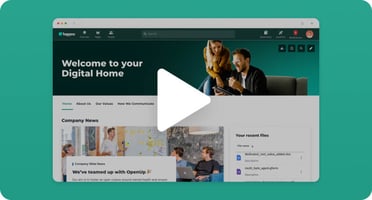
A digital employee experience platform is a cloud-based hub that centralizes internal communication, collaboration, and company knowledge into a single, accessible environment. Think of it as the digital headquarters for your workforce—the place employees go first each day to catch up on news, find information, connect with colleagues, and get work done.
In practical terms, this means features like company news feeds, structured content pages for policies and processes, team channels for ongoing collaboration, a searchable people directory with org charts and profiles, and powerful search that spans all of it. Instead of hunting through email, digging through shared drives, or pinging colleagues on chat to ask “where’s the latest version of X?”—employees have one place that answers those questions.
This differs significantly from a traditional intranet, which typically functioned as a static, top-down content repository. Those legacy systems became “content graveyards”—places where documents went to be forgotten. Modern platforms are dynamic, interactive, and designed for two-way engagement.
It’s also different from point tools like Slack, Microsoft Teams, or your HRIS. Those tools serve specific purposes well, but they don’t unify the experience. A digital employee experience platform sits on top of your existing stack—integrating with productivity suites like Google Workspace or Microsoft 365—and orchestrates a coherent employee journey across all of them.
Modern platforms in this space include Happeo, Microsoft Viva, LumApps, Unily, and Staffbase. Each has different strengths, but they share the goal of making digital work feel seamless rather than fragmented.
Typical use cases driving adoption in 2024–2026 include:
-
Hybrid and remote work coordination for distributed teams
-
Global organizations needing multilingual support and regional content targeting
-
Fast-growing scale-ups that outgrow ad-hoc communication quickly
-
M&A integrations where bringing cultures and systems together is critical
-
Deskless workers in retail, manufacturing, and healthcare who need mobile access without corporate email
Why digital employee experience matters in 2024–2026
Since 2020, the way people work has fundamentally shifted. Remote work went from exception to expectation. Tool sprawl accelerated as organizations adopted new software rapidly. And “digital fatigue” became a real phenomenon—employees overwhelmed by notifications, apps, and the constant context-switching between systems.
The data backs up what many already feel. According to Microsoft’s Work Trend Index, employees spend significant portions of their day searching for information and switching between applications. Gallup research consistently shows that employee engagement directly correlates with productivity, retention, and customer outcomes. When digital tools frustrate rather than enable, engagement suffers.
Poor digital employee experience shows up in daily work in predictable ways:
-
Constant app-switching that breaks focus and flow
-
Information silos where different teams have different “truths”
-
Outdated documents circulating because nobody knows where the current version lives
-
Missed announcements because important data gets buried in email
-
Shadow IT emerging as employees find workarounds for tools that don’t serve them
These aren’t just annoyances—they translate to measurable business outcomes. Organizations with strong digital experiences see higher retention, faster onboarding, fewer IT tickets for basic questions, improved compliance through accessible policies, and better customer experience because employees have what they need to serve customers well.
A digital employee experience platform provides a practical way to manage DEX intentionally. Rather than leaving the digital environment to chance—letting it evolve through random tool additions and workarounds—organizations can design an experience that actually supports how people work.
Core capabilities of a digital employee experience platform
Before diving deeper into each area, here’s an overview of what a comprehensive platform typically includes:
Internal communications: News feeds, company announcements, internal newsletters, and leadership updates—with targeting by location, department, or role, and scheduling for optimal timing.
Collaboration hubs: Persistent channels for teams, department spaces, and project pages that keep conversations, documents, and updates together. Integration with tools like Google Drive or SharePoint means files live in context rather than scattered across systems.
Knowledge management: Structured pages for HR policies, IT guides, process documentation, and compliance information. Searchable repositories with version control ensure employees find current, trusted content.
Social features: Comments, reactions, @mentions, and sharing that make collaboration feel natural. Communities of practice, recognition spaces, and rich employee profiles humanize the digital workplace.
Analytics and feedback: Content engagement metrics showing what resonates, search analytics revealing gaps, pulse surveys for quick check-ins, and sentiment analysis to understand how employees feel.
Mobile access: Responsive web experiences and native apps for iOS and Android. Push notifications for critical updates, with controls to prevent notification overload. Offline-friendly content for employees with unstable connections.
Not all platforms are equal in these capabilities. Some focus primarily on communication (like Staffbase), others on IT-side experience monitoring (like Nexthink), and others combine intranet functionality with collaboration (like Happeo). Understanding your priorities helps narrow the field.
Key benefits of a digital employee experience platform
The benefits of implementing a digital employee experience platform span multiple stakeholders—employees gain better tools, leaders get visibility, and HR, IT, and Communications teams all see their work become more effective.
Improved engagement and alignment
When employees can easily access company strategy, leadership messages, and organizational news, they feel more connected to the mission. A platform creates transparency that email can’t match—CEO updates don’t get buried, company wins get celebrated visibly, and everyone sees the same source of truth.
This visibility matters especially for remote and distributed teams. Without a central hub, remote workers often feel disconnected from company culture. A digital employee experience platform provides the digital equivalent of being in the office—you see what’s happening, you know who’s doing what, and you feel part of something larger.
Productivity gains
Knowledge workers spend a shocking amount of time searching for information. When HR policies live in one system, IT guides in another, and project documents in a third, finding anything becomes a scavenger hunt.
A unified platform with powerful search changes that dynamic. Employees find the latest benefits policy in seconds rather than emailing HR. They locate the expense report template without asking their manager. They know exactly where to go for onboarding checklists, compliance training, or IT troubleshooting guides.
Reduced context-switching adds up too. Instead of hopping between email, chat, intranet, and shared drives, employees work from a single starting point that connects them to everything else.
Onboarding and employee lifecycle impact
Structured digital journeys dramatically improve the new employee experience. Rather than overwhelming new hires with a flood of emails and links, a well-designed onboarding hub provides:
-
Role-based checklists that guide the first 90 days
-
Welcome messages and intro videos from leadership
-
Easy access to key policies and benefits information
-
Clear paths to mandatory training
-
Introductions to their team via people directory and org chart
This structure accelerates time-to-productivity and improves retention. New employees feel supported rather than lost—a significant factor given that poor onboarding is a leading cause of early turnover.
The same approach applies to other employee journeys: internal moves, parental leave, return-to-office transitions, and offboarding all benefit from structured, accessible digital experiences.
Community and culture building
Digital workplaces enable the kind of cross-location connection that’s impossible with email alone. Communities of practice bring together people with shared roles or interests across the organization. Interest groups—sports, parents, sustainability—create social bonds that strengthen culture.
Recognition becomes visible and scalable. Rather than praise happening only in private conversations, shout-out channels and kudos posts let the whole organization celebrate wins together.
For hybrid teams especially, these features replace the informal culture-building that happens naturally in physical offices. Without intentional digital spaces for connection, remote workers can feel isolated from colleagues and company culture.
IT and operations benefits
IT teams benefit when employees can self-serve answers to common questions. “How do I reset my password?” “What’s the policy on personal devices?” “Where’s the VPN setup guide?” When these answers live in a searchable, well-maintained knowledge base, ticket volume drops.
Analytics reveal which tools employees actually use, helping rationalize software spend. Visibility into search queries shows what information is missing or hard to find. And reduced shadow IT happens naturally when sanctioned tools are easy to access and use.
Platforms like Happeo provide analytics that prove value to leadership—engagement with CEO posts, search terms with no results, adoption by region—data that helps Communications and HR iterate on their strategy.
How a digital employee experience platform works (architecture and integrations)
A digital employee experience platform is fundamentally a “platform, not point solution.” This means integrations aren’t an afterthought—they’re central to how the system works.
Typical architecture
Most platforms follow a similar pattern:
-
Cloud-hosted SaaS that scales automatically and doesn’t require on-premises infrastructure
-
Secure single sign-on (SSO) through identity providers like Google, Okta, or Azure AD
-
Role-based permissions that control who sees what content and who can edit it
-
Regional data hosting options (EU, US, etc.) for organizations with data residency requirements
Productivity suite integration
The deepest integrations typically connect with your primary productivity suite. Happeo, for example, integrates tightly with Google Workspace:
-
Drive integration lets you embed and surface documents directly in pages and channels
-
Google Groups power permissions, automatically syncing access with your existing group structure
-
Calendar widgets show team events and company meetings in context
-
Meet links embed naturally for virtual meetings and town halls
-
Gmail connections ensure email-based workflows can link back to platform content
Other platforms integrate similarly with Microsoft 365 and Teams, embedding SharePoint documents, using Azure AD groups for permissions, and connecting with Outlook calendars.
Interoperability with existing tools
Beyond productivity suites, platforms connect with:
-
Chat tools like Slack or Google Chat for real-time communication
-
HRIS systems like Workday, BambooHR, or Personio for employee data
-
Project tools like Asana, Jira, or Monday.com
-
Ticketing systems like ServiceNow or Zendesk for IT and HR service desk integration
Unified search
The most powerful feature of a well-integrated platform is unified search. Instead of searching each system separately, employees query once and find results across:
-
Intranet pages and posts
-
Documents in connected repositories
-
People profiles and contact information
-
Channels and historical discussions
Governance and security
Enterprise requirements demand:
-
Granular permissions controlling access at page, channel, and content levels
-
Content lifecycle management with expiry dates and review reminders
-
Audit logs tracking who accessed and changed what
-
Compliance with standards like ISO 27001 and GDPR
Digital employee experience platform vs. traditional intranet vs. IT DEX tools
Understanding how these categories differ helps clarify what you actually need.
Traditional intranets (like legacy SharePoint-only sites) were essentially static websites living inside the firewall. They focused on top-down communication—announcements, policies, and document libraries. Content flowed one direction: from company to employee. Updating required technical skills, so pages often grew stale. Employees had little reason to return daily.
Digital employee experience platforms are dynamic, two-way environments. They combine traditional intranet functions (news, policies, documentation) with social features (comments, reactions, communities) and collaboration capabilities (channels, team spaces, shared work). Content is personalized by role, location, and preferences. Employees engage actively rather than passively consuming. These platforms aim to be the first place employees go each workday.
IT-centric DEX tools (like Nexthink or 1E) focus on a different problem entirely. They monitor device performance, application health, and endpoint analytics. They track login times, app crashes, network latency, and other technical factors that affect how digital tools feel to use. They’re essential for IT teams managing large device fleets but don’t address communication or knowledge management.
A modern strategy often combines both:
-
An employee-facing experience platform (like Happeo or Unily) handles communication, collaboration, and knowledge
-
An IT DEX layer monitors the technical infrastructure ensuring that devices and networks perform well
Buyers should clarify which problem they’re solving. Need better internal communications and knowledge management? That’s an employee experience platform. Need to monitor device performance and application health? That’s an IT DEX tool. Many organizations need both, working together.
Essential features to look for in a digital employee experience platform
This isn’t just a feature list—it’s a buyer’s checklist. Priorities differ based on company size, industry, and specific pain points, but these capabilities matter for most organizations.
Intuitive UX and accessibility
-
Consumer-grade interface that feels familiar, not like enterprise software from 2005
-
WCAG-compliant design supporting employees with disabilities
-
Low training burden—employees should be productive immediately
-
Works well for all employees, including frontline workers who may have limited tech experience
Strong personalization
-
Role, location, and language-based content targeting
-
Personalized homepages showing relevant news, channels, and tools
-
Smart feeds that reduce noise rather than amplifying it
-
Ability for employees to customize their own view
Content management
-
Easy page building without requiring technical skills
-
Reusable templates for common page types
-
Approval workflows for governance
-
Content expiry dates and review reminders
-
Version history showing who changed what and when
Search quality
-
Fast, typo-tolerant search that forgives common mistakes
-
Results spanning pages, documents, people, and channels from a single search bar
-
Filters and facets to narrow results quickly
-
Analytics showing what people search for and don’t find
Analytics and measurement
-
Content performance metrics (views, engagement, shares)
-
Search trends revealing information gaps
-
Audience reach by department, location, and role
-
Engagement breakdown showing which messages resonate
Governance and compliance
-
Audit logs for security and compliance teams
-
Granular permissions at page and channel levels
-
Clear content ownership and accountability
-
Alignment with privacy requirements (GDPR, etc.)
Integrations and openness
-
Native connectors for Google Workspace or Microsoft 365
-
APIs and webhooks for custom integrations
-
Pre-built connections to common HRIS, ticketing, and project tools
-
Ability to embed content from and link to other systems
Scalability and reliability
-
Proven uptime with clear SLAs
-
Customer references from similar-sized organizations
-
Performance that holds up during peak usage (all-hands announcements, company-wide news)
Internal communications and leadership visibility
A digital employee experience platform becomes the primary channel for internal news—replacing the scattered emails, announcements, and updates that employees currently miss or ignore.
News feeds and homepages
The platform homepage surfaces company-wide announcements, leadership messages, and urgent alerts. Unlike email, where important data competes with reply-all threads and meeting invites, the homepage provides a curated view of what matters.
Employees see fresh content each time they visit, encouraging habitual check-ins. Urgent alerts can be pinned or highlighted, ensuring critical information isn’t missed.
Internal newsletters
Many platforms support creating and sending internal newsletters directly within the system. Communications teams can:
-
Build newsletters using drag-and-drop editors
-
Target specific audiences by department, location, or role
-
Track open rates, click-through rates, and engagement
-
Maintain archives employees can reference later
This consolidates newsletter creation, distribution, and analytics in one place rather than juggling email marketing tools.
Leadership visibility
Transparency builds trust. Platforms enable leadership visibility through:
-
CEO blogs where executives share strategy, reflections, and company direction
-
AMA (Ask Me Anything) posts where employees can submit questions and leaders respond publicly
-
Video messages embedded directly in the platform
-
Q&A threads following town halls or major announcements
These spaces make leaders accessible and human, especially important in large organizations where most employees never interact with executives directly.
Virtual town halls
Live events integrate naturally:
-
Embed live streams from Google Meet, YouTube Live, or other video platforms
-
Collect questions before and during the event
-
Store recordings for employees who couldn’t attend live
-
Generate discussion in comments after the event
Targeted messaging
Segmentation ensures the right people see the right personalized messages. Regional offices get location-specific updates. Departments see relevant announcements without noise from other areas. Regulatory notices reach only affected regions.
This targeting improves both relevance (employees see what matters to them) and compliance (required communications reach required audiences).
Collaboration spaces, communities, and culture-building
Email wasn’t designed for collaboration. Threads become confusing, attachments multiply, and context gets lost. A digital employee experience platform moves ongoing work into persistent, organized spaces.
Team and department hubs
Every team and department can have their own space—a channel or hub where:
-
Updates and announcements live permanently (not buried in email history)
-
Documents are linked or embedded in context
-
Discussions happen openly, visible to the whole team
-
New team members can scroll back to understand history and decisions
This creates transparency within teams. Instead of information living in individual inboxes, it’s accessible to anyone who needs it.
Communities of practice and interest groups
Beyond formal teams, organizations benefit from communities that cross organizational boundaries:
-
Role-based communities: Customer success professionals, engineers, people managers
-
Topic-based communities: AI and automation, sustainability, DEI initiatives
-
Social interest groups: Parents, runners, book clubs, gaming
These communities connect employees who might never interact otherwise, building relationships that strengthen collaboration and culture.
Social features
Comments, reactions, @mentions, and sharing make collaboration lightweight and natural. Employees can:
-
React to posts with emoji (faster than writing a response)
-
Comment to add context or ask questions
-
@mention colleagues to pull them into conversations
-
Share content across channels to spread important information
Employee recognition
Recognition spaces make appreciation visible:
-
Shout-out channels where anyone can celebrate a colleague
-
Kudos posts for team wins and individual contributions
-
Badges or awards for completed achievements
-
Comments that let others pile on with additional recognition
Public recognition reinforces values and norms. When employees see what gets celebrated, they understand what the organization truly values.
Culture reinforcement
Culture isn’t what’s written in a handbook—it’s what people see and experience daily. A digital employee experience platform provides continuous cultural reinforcement through:
-
Visible company values embedded in content and conversations
-
Employee stories and spotlights highlighting real people
-
Cross-location initiatives that connect distributed teams
-
Celebration of company milestones, anniversaries, and wins
Knowledge management and “single source of truth”
Poor knowledge management has real costs. Employees waste time searching for information. They work from outdated documents without realizing it. They ask questions that have been answered dozens of times before. HR and IT teams drown in repetitive requests.
Structured content and navigation
Platforms like Happeo use structured pages and intuitive navigation to centralize critical content:
-
HR policies and benefits information
-
IT guides and troubleshooting documentation
-
Compliance requirements and regulatory information
-
Process documentation and how-to guides
-
Company policies and handbooks
Logical organization means employees know where to go. HR owns the HR section. IT owns the IT section. Each team maintains their domain, and employees navigate a coherent structure rather than a random collection of documents.
Powerful search
Good structure only helps if search works. Modern platforms offer:
-
Natural language queries that understand what employees mean
-
Typo tolerance for common mistakes
-
Results ranked by relevance, freshness, and popularity
-
Filters to narrow results by content type, author, or date
When search works well, employees find what they need in seconds. When it doesn’t, they give up and ping colleagues or submit tickets.
Content ownership and governance
Keeping content accurate requires clear ownership:
-
Designated owners for each content area
-
Review cycles that prompt owners to verify and update content
-
Version control showing change history
-
Expiry dates that surface content needing refresh
Without this governance, knowledge bases drift into inaccuracy over time, eroding employee trust and driving them back to email and chat for answers.
Document integration
Rather than duplicating content, platforms integrate with document repositories:
-
Embed Google Drive files directly in pages
-
Link to SharePoint documents with automatic permission awareness
-
Surface document search results alongside page results
This approach keeps documents in their authoritative location while making them discoverable and accessible from the digital workplace.
Multilingual support
Global organizations need content in multiple languages. Platforms should support:
-
Language variants of pages with clear relationships
-
User preferences that surface content in the right language
-
Translation workflows for managing multilingual content lifecycle
Onboarding, employee journeys, and HR self-service
Structured digital journeys significantly improve outcomes at key moments in the employee lifecycle. Faster time-to-productivity, better retention, and improved employee satisfaction all result from intentional onboarding design.
Onboarding centers
A dedicated onboarding hub provides new hires with everything they need:
-
Role-based checklists guiding the first 30, 60, and 90 days
-
Welcome messages from leadership and their manager
-
Key company policies and essential reading
-
Intro videos explaining company history, values, and culture
-
Links to mandatory training and compliance requirements
-
Benefits enrollment information and resources
Instead of a flood of disconnected emails, new employees have a single starting point that remains accessible throughout their ramp-up period. They can work at their own pace, revisiting content as questions arise.
Employee journey design
HR teams can build structured journeys for other key moments:
-
Internal moves: When employees transfer to new roles or locations
-
Parental leave: Pre-leave preparation, during-leave connection, and return support
-
Return-to-office: Hybrid work norms, booking resources, and expectations
-
Offboarding: Knowledge transfer, exit processes, and alumni connection
Each journey includes relevant content, checklists, and connections to the right people and resources.
HRIS integration
Integration with human resources systems like Workday, Personio, or BambooHR enables automation:
-
Automatic access provisioning when employees join
-
Role and location updates that trigger content relevance changes
-
Access removal during offboarding
-
Manager assignments that surface in org charts and directories
HR self-service
When employees can find answers themselves, HR teams spend less time on repetitive questions:
-
FAQ pages covering common questions about benefits, policies, and procedures
-
How-to guides walking through processes step-by-step
-
Forms and request workflows for time-off, expenses, and other needs
-
Links to relevant HRIS portals for self-service transactions
Connection and belonging
Onboarding isn’t just about information—it’s about connection. Features that help new employees feel part of the team:
-
People directory with rich profiles showing interests and expertise
-
Org chart visualizing their place in the organization
-
Team spaces where they can introduce themselves
-
Communities they can join based on interests
When a new hire feels connected to their team and the broader organization, engagement follows.
Employee feedback, surveys, and analytics
You can’t improve what you don’t measure. Feedback and analytics form the measurement layer of digital employee experience, revealing what’s working and what needs attention.
Survey capabilities
Built-in or integrated survey tools support:
-
Pulse surveys: Quick, regular check-ins on engagement and wellbeing
-
One-question polls: Embedded in pages or channels for immediate feedback
-
Engagement surveys: Deeper periodic assessments of satisfaction and sentiment
-
Event feedback: Post-town hall or post-training reactions
Surveys embedded in the platform employees already use get better response rates than external tools that require separate logins.
Content analytics
Understanding which content resonates helps Communications and HR teams iterate:
-
Views and unique visitors by page and post
-
Comments, reactions, and shares showing engagement depth
-
Dwell time indicating whether people actually read content
-
Engagement breakdown by department, location, and role
This data reveals what works. A CEO post with high engagement suggests a topic or format worth repeating. A policy page with no views indicates content that’s either unnecessary or unfindable.
Search analytics
Search data surfaces gaps:
-
Top search queries showing what employees look for
-
Searches with no results revealing missing content
-
Click-through rates indicating whether results satisfy the query
-
Trends over time showing emerging needs
When employees repeatedly search for something that doesn’t exist, that’s a signal to create it. When they search but don’t click results, search quality or content relevance needs attention.
Sentiment analysis
Where available, sentiment analysis adds qualitative depth:
-
Analyzing comment tone to gauge reaction to announcements
-
Tracking employee sentiment trends over time
-
Surfacing emerging concerns before they become crises
Even without formal sentiment analysis, open feedback channels—comment threads, suggestion boxes, AMA questions—provide qualitative insights into how employees feel.
Privacy and anonymity
Sensitive surveys require careful handling:
-
Anonymous responses for candid feedback
-
Aggregated data that protects individual privacy
-
Clear communication about how data will and won’t be used
-
Compliance with privacy regulations
Trust depends on employees believing their feedback won’t be used against them.
Mobile-first and hybrid work support
Hybrid and distributed teams have become the default for many organizations. A digital employee experience platform must work as well on mobile devices as on desktops—and for some employees, mobile is the primary or only access point.
Mobile apps and responsive design
Platforms should offer:
-
Native iOS and Android apps with full functionality
-
Responsive web experiences that adapt to screen size
-
Consistent navigation and features across devices
-
Fast performance even on lower-bandwidth connections
Employees checking company news from their phone during a commute or field workers accessing safety procedures on a tablet—both need a first-class experience.
Push notifications
Critical updates need to reach employees wherever they are:
-
Push notifications for urgent announcements
-
Alerts for town halls, policy changes, and time-sensitive information
-
Notification settings that let employees control what they receive
-
Quiet hours and batching to prevent notification overload
The balance matters. Too many notifications and employees disable them entirely. Too few and critical information gets missed.
Offline capabilities
For employees with unstable connections—field workers, manufacturing staff, retail employees—offline access matters:
-
Reading cached content without connectivity
-
Queuing interactions (comments, reactions) to sync when back online
-
Downloading critical documents for offline reference
Deskless employee support
Employees without corporate email addresses—common in retail, manufacturing, logistics, and healthcare—need access methods that work for them:
-
Mobile app login without requiring corporate email
-
Simple authentication that doesn’t require complex passwords
-
Content targeting for frontline roles and locations
-
Features designed for quick, on-the-go consumption
Secure personal device access
Many organizations support BYOD (bring your own device):
-
SSO integration enabling secure access from personal devices
-
Mobile device management policy compatibility
-
Session management and remote logout capabilities
Choosing the right digital employee experience platform: step-by-step
Evaluating and selecting a platform requires coordination across HR, IT, and Communications. Here’s a practical framework for the process.
Step 1: Define objectives
Start by clarifying what you’re trying to achieve:
|
Objective |
Example KPIs |
|---|---|
|
Improve engagement |
Newsletter open rates, platform daily active users, comment volume |
|
Centralize knowledge |
Reduction in “where do I find…” tickets, search success rate |
|
Strengthen culture |
Community membership, recognition post volume |
|
Accelerate onboarding |
Time-to-productivity, new hire satisfaction scores |
|
Reduce email overload |
Email volume decrease, platform announcement views |
Clear objectives prevent scope creep and help evaluate success.
Step 2: Map your tech stack
Document your current environment:
-
Primary productivity suite (Google Workspace or Microsoft 365)
-
Chat and collaboration tools (Slack, Teams, Google Chat)
-
HRIS system (Workday, BambooHR, Personio)
-
Project management tools (Asana, Jira, Monday)
-
Ticketing systems (ServiceNow, Zendesk)
Required integrations often eliminate or prioritize vendors. A Google Workspace organization will find Happeo’s native integration compelling. A Microsoft 365 environment might lean toward Viva or platforms with strong Microsoft integration.
Step 3: Involve stakeholders
Different stakeholders have different requirements:
-
IT teams care about security, SSO, data residency, and compliance
-
Communications needs targeting, scheduling, analytics, and content management
-
HR wants onboarding support, policy management, and employee lifecycle features
-
Legal requires audit logs, permissions governance, and regulatory compliance
-
Employees need usability, mobile access, and features that actually help them work
Involving these groups early prevents surprises during implementation.
Step 4: Shortlist vendors
Compare platforms based on fit with your ecosystem and needs:
|
Platform |
Best fit |
|---|---|
|
Happeo |
Google Workspace organizations, mid-sized to large enterprises |
|
Microsoft Viva |
Microsoft 365 environments with Teams as primary hub |
|
LumApps |
Enterprises wanting flexible customization |
|
Unily |
Large enterprises with complex requirements |
|
Staffbase |
Organizations prioritizing internal communications |
Narrow to 2-3 vendors for deeper evaluation.
Step 5: Run pilots and proofs of concept
Structured pilots reveal what demos can’t:
-
Create real content and see how easy it is to manage
-
Test search with actual employee queries
-
Measure adoption and engagement during the pilot
-
Evaluate admin workload for ongoing maintenance
-
Gather user feedback from pilot participants
Define success criteria upfront so the pilot produces actionable data.
Step 6: Assess implementation and support
Deployment success depends on vendor support:
-
Onboarding and implementation services
-
Customer success resources and responsiveness
-
Training materials for admins and end users
-
Typical time-to-launch for organizations of your size
-
References from similar customers
A powerful platform poorly implemented delivers less value than a simpler platform well deployed.
Step 7: Confirm governance, security, and data residency
Enterprise requirements must be met:
-
Data hosting location options (EU, US, specific countries)
-
Compliance certifications (ISO 27001, SOC 2)
-
GDPR compliance and data processing agreements
-
Security architecture documentation
-
Penetration testing and vulnerability management
Work with IT and Legal to confirm requirements before finalizing selection.
Why organizations choose Happeo as their digital employee experience platform
Happeo is a cloud-based intranet and digital workplace built primarily for organizations using Google Workspace. It combines the best of intranet, social, and collaboration into a unified platform that feels modern and intuitive.
Core strengths
-
Channels for social collaboration that keep teams connected
-
Pages for structured content that creates a true single source of truth
-
People directory with rich profiles, org charts, and expertise search
-
Unified search spanning pages, documents, people, and channels
Google Workspace integration
For Google-centric organizations, Happeo’s integration is a game changer:
-
Drive embedding: Surface Google Docs, Sheets, and Slides directly in pages and channels
-
Groups-based permissions: Use existing Google Groups to manage access automatically
-
Calendar widgets: Show team and company events in context
-
Meet integration: Embed video meeting links naturally in content
This deep integration means Happeo extends rather than competes with tools employees already use.
Analytics and insights
Happeo provides the analytics Communications, HR, and leadership teams need:
-
Content performance metrics showing what resonates
-
Channel engagement data by department and location
-
Search analytics revealing information gaps
-
Adoption metrics proving platform value to executives
Customer profile
Happeo serves mid-sized to large organizations, particularly those with:
-
Distributed or remote teams needing connection
-
Fast-growing companies requiring scalable internal communication
-
Multi-country organizations managing multilingual content
-
Organizations seeking to improve engagement and reduce tool sprawl
Happeo aims to be the single source of truth for internal communication, collaboration, and knowledge—the digital home base where distributed teams communicate effectively and stay aligned.
Getting started with a digital employee experience platform
Implementing a digital employee experience platform is a journey, not a switch you flip. Here’s how to start.
Audit your current state. Before engaging vendors, understand your starting point:
-
Where do employees currently get company news?
-
How do they find policies and procedures?
-
What questions repeatedly hit HR and IT?
-
Which tools create the most friction?
This audit reveals pain points that guide your requirements and help you measure improvement.
Start with a clear use case. Don’t try to do everything at once. Pick one high-value starting point:
-
A new intranet homepage replacing a legacy site
-
A leadership communications hub for executive visibility
-
An onboarding center for new employees
-
A knowledge base for a single department (then expand)
Prove value with a focused implementation, then expand over time.
Form a cross-functional DEX taskforce. Success requires coordination:
-
HR representation for employee experience perspective
-
IT for security, integration, and technical requirements
-
Communications for content strategy and adoption
-
Representative employees from different locations and roles
This group guides requirements, champions adoption, and ensures the platform serves the whole organization.
Explore platforms through demos and trials. See how platforms actually work:
-
Request demos focused on your specific use cases
-
Ask for customer references from similar organizations
-
Run trials where your team creates real content
-
Evaluate both admin experience and end-user experience
A digital employee experience platform like Happeo can centralize your communication, collaboration, and knowledge in practice—creating the unified digital employee experience your workforce deserves.
FAQ
What is a digital employee experience platform?
A digital employee experience platform is a cloud-based hub that centralizes internal communication, collaboration, and company knowledge into one accessible environment employees can use every day.
How is a digital employee experience platform different from a traditional intranet?
Traditional intranets are static, top-down content repositories, while a digital employee experience platform is dynamic and two-way, combining communication, social features, and collaboration tools that keep employees engaged.
What are the key benefits of a digital employee experience platform?
A digital employee experience platform improves engagement, cuts time spent searching for information, speeds up onboarding, strengthens culture, and reduces repetitive tickets for HR and IT.
How do you choose the right digital employee experience platform?
Choosing the right platform means defining clear objectives, mapping your existing tech stack, involving HR, IT, and Communications stakeholders, and running a structured pilot before rolling it out organization-wide.
