









Shared workspaces are here to stay



8 mins read
In the span of just a few months, the way we work and navigate our daily lives has changed.
Businesses all over the world have completely readjusted their operations in an effort to stop or slow down the spread of COVID-19, or the coronavirus. As governments have ordered individuals to stay home and practice social distancing, more employees are experiencing remote work for the very first time. Unfortunately, not everyone is equipped to manage a remote work situation.
Need a tool to effectively collaborate in coworking spaces?
Watch video
Despite the benefits of working from home, some people find it very distracting. Some of the top interruptions include household duties or chores. Anyone working in a dedicated office space won’t be able to see the dishes overflowing or the laundry piling up. This is why flexible workspaces exist – they are positioned to help people work safely and efficiently in an isolated area. Also called shared offices or coworking spaces, these areas are designed to help large corporations and small businesses alike.
Learn how your organization can take advantage of these shared offices below.
Why businesses need shared offices
When the average person thinks of coworking spaces, they imagine freelance workers who work remotely. However, there is a growing trend of large organizations taking advantage of the benefits shared offices offer. Technology giants Microsoft, IBM, and Verizon are all testing flexible workspaces for employees. Coworking helps them remain competitive while making it easier for teams to communicate or work with each other, even in different cities or time zones. Some experts even say that corporate coworking is the future of the industry.
So how does a shared office work? Coworking spaces offer employees all the conventional perks of a traditional office without the long-term lease. Tenants pay through a simple monthly membership fee, and in exchange, they can access private and communal areas. This offers businesses superior flexibility because they can grow or downsize as needed. Coworking spaces also come pre-furnished and full of different amenities such as conference rooms, break rooms, and kitchens.
The cost benefits of coworking spaces
When new companies invest in shared offices, they avoid quite a lot of startup costs. First, the month-to-month rates of flexible workspaces are far less expensive than beginning long-term leases from scratch. Commercial real estate in cities like New York City and Los Angeles is almost unattainable for a growing business. Instead, shared spaces provide all of the utilities and furniture you need without additional financing. This includes pricey appliances like refrigerators and microwaves.
In order to attract and retain top talent, businesses need offices in centrally-located areas near other businesses, transportation, and shops. The buildings themselves should also seem clean, up-to-date, and modern. Most coworking spaces are located in busy, yet easy to access districts. When people work remotely, they want to be able to travel to an open office in a convenient location. The coworking business model is the perfect solution for organizations that want to be more accessible to their employees.
Discover all the features of an intranet software
Download list
Why employees need shared offices
With people working from home, it is easy to feel isolated or lonely. This is because they may not have the same social interaction at home when compared to a traditional office space. Coworking companies provide a convenient and professional work environment that encourages community between workers in a wide range of industries. As a result, people can enjoy a greater work-life balance. And since these working spaces also offer private offices, employees can choose when to be social.
Coworking spaces are also ideal for networking with a number of people, including other entrepreneurs. So if you need assistance with bookkeeping or a web designer, the professionals you need might be a few desks away. Mingling with others is also great for gaining new business through word of mouth. Many flexible working spaces even offer short-term community events and programs so individuals can learn new skills and educate themselves.
Tools for efficient coworking
Even though shared offices give organizations and their employees a fully equipped space, businesses still need the right remote working tools to get things done. If you want to expand your business by employing international talent from around the world, you might worry about how to get your teams together during the coronavirus pandemic. Luckily, Google Workspace offers the very best platforms for managing a remote workforce. It allows people in different time zones to work on projects at the same time.
First, Google Drive gives workers access to any files they need through cloud storage solutions. Remote workers can upload files to Google Drive and share them with other parties, including administrators or other workers. The constant synchronizing of data allows everyone to have the most up-to-date information possible. The best part is that individual permissions can be managed through the administrator panel. Organizations can remove access as needed to keep their company data safe.
Using a combination of Google Calendar and Google Meet, employees can schedule video chats to collaborate on different projects. In fact, the free version of Google Meet allows you to bring together up to 10 people for a video chat. Whether you need to pitch a new client or hold a training seminar, these programs make it easy to complete projects. Managers and team leaders can even block off certain times in their Google Calendar to keep themselves organized throughout the week. To make work even easier there are intranet solutions available that integrate with Google Workspace like Happeo.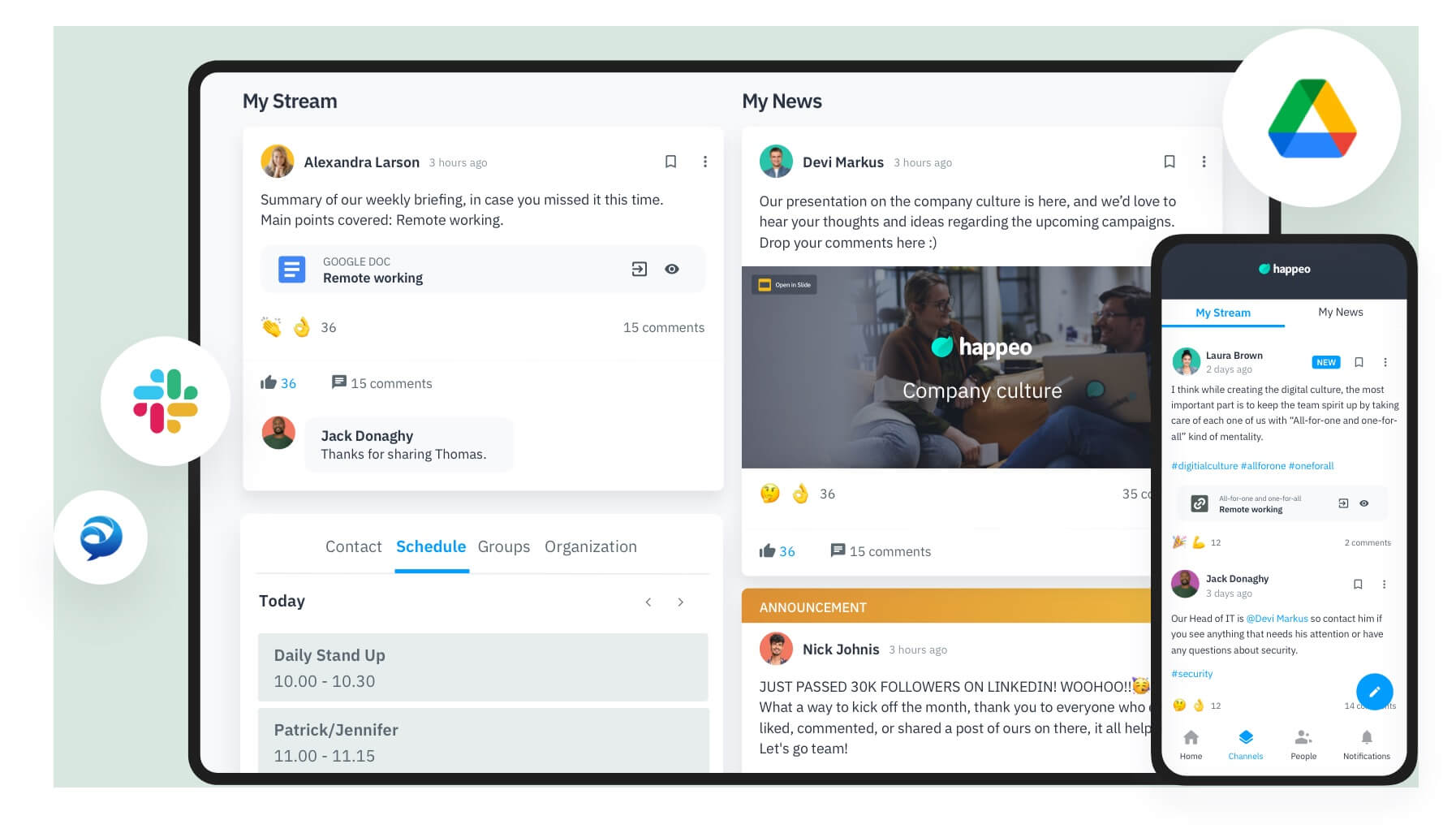
How to boost collaboration during remote work
The COVID-19 pandemic has caused us to change how we think about the workplace. Employees do not have to choose between the traditional office or the comfort of their own home. Coworking spaces and shared offices will continue to be an important tool for workers, especially with the benefits and resources they offer.
Want to see how Happeo helps your business
Book demo
At Happeo, we are experts in workplace innovation. While flexible offices have been increasing in number over the last few years, we provide the software and tools you need to succeed. Learn more about what we have to offer by contacting a member of our knowledgeable staff today. We can get you started in the right direction.
Why are large businesses and corporations increasingly adopting shared offices or coworking spaces?Large businesses are increasingly adopting shared offices because flexible workspaces allow them to remain competitive, improve communication across different locations, and scale their operations dynamically. Major technology giants like Microsoft, IBM, and Verizon are already utilising these environments to foster better collaboration. Instead of being locked into rigid, long-term commercial leases, companies can pay a simple monthly membership fee, which gives their teams instant access to both private offices and communal work areas.
This setup provides corporations with superior operational flexibility, meaning they can easily expand or downsize their physical workspace as their staffing requirements change. Coworking spaces also remove the administrative burden of managing an office, as they arrive fully pre-furnished and equipped with essential amenities. This includes conference rooms, break areas, and fully stocked kitchens, allowing teams to focus entirely on their core work rather than office upkeep.
Furthermore, corporate coworking is increasingly seen by industry experts as the future of the workplace. It allows large organisations to establish a presence in prestigious, centrally-located business districts that might otherwise be too costly or difficult to secure. By placing employees in these active hubs, businesses can easily attract and retain top talent who value convenience, while also facilitating networking opportunities with external innovators, startups, and entrepreneurs who share the same space.
Ultimately, this approach bridges the gap between remote flexibility and the structured collaboration that modern businesses need to thrive.
What are the financial advantages of using a coworking space compared to a traditional office?Using a coworking space allows businesses to avoid substantial upfront startup costs, expensive long-term leases, and ongoing utility fees. For new and growing companies, renting traditional commercial real estate in prime city districts like New York City or Los Angeles can be financially unattainable. Coworking spaces solve this problem by offering predictable, month-to-month rates that are far less expensive than setting up a dedicated office from scratch.
These shared environments provide all the necessary utilities, high-quality office furniture, and expensive kitchen appliances like refrigerators and microwaves without requiring additional financing or capital expenditure. Because these amenities are shared and managed by the coworking provider, businesses do not have to worry about unexpected maintenance costs, internet installation fees, or cleaning services, which drastically lowers their monthly overheads. This makes budgeting highly predictable, as almost all operational expenses are bundled into a single monthly invoice.
Additionally, coworking spaces are typically situated in highly desirable, centrally-located districts near public transport, dining, and shops. Securing a traditional lease in such areas would normally demand a massive premium. By choosing a shared office, smaller organisations can position themselves in prestigious business hubs, helping them attract top-tier talent and network with potential clients without the heavy financial risks associated with prime commercial real estate. This financial agility is particularly valuable for startups that need to conserve capital for product development and marketing, rather than tying up precious resources in property deposits and long-term financial commitments.
What digital tools are necessary for teams to collaborate effectively in a shared workspace?To collaborate effectively in a shared workspace, teams require a suite of cloud-based digital tools like Google Workspace and integrated intranet solutions to manage files, communication, and scheduling. While coworking spaces provide the physical infrastructure, digital platforms ensure that employees working across different locations or time zones remain fully aligned. Google Drive serves as a central repository, allowing remote workers to securely store, synchronise, and share files in real time.
Administrators can easily manage individual file permissions through a central panel, ensuring that sensitive company data remains secure at all times. For communication and meeting coordination, teams can utilise a combination of Google Calendar and Google Meet. These platforms enable employees to schedule video conferences, host training seminars, and pitch to clients. The free version of Google Meet even allows up to ten people to join a video call simultaneously.
Managers can also block off dedicated focus time in their shared calendars to keep their weekly schedules organised and visible to their teams.
To further streamline operations, businesses can implement intranet solutions like Happeo, which integrate seamlessly with Google Workspace. This combination creates a unified digital home where workers can access company news, collaborate on active projects, and connect with colleagues. Having these tools in place ensures that whether employees are working from home, hot-desking, or operating internationally, they always have direct access to the resources and support they need. This digital setup ultimately bridges the physical gap, transforming any shared office into a highly productive hub.
