







Intranet Examples to Get Inspired




Sophia Yaziji
14 mins read
Key Takeaways
- Great intranet examples share clear navigation, a focused intranet homepage, strong search functionality, and mobile access for frontline workers.
- Modern intranets go beyond company news: they power internal communications, knowledge sharing, employee recognition, and day-to-day work across the entire company.
- The best way to use intranet examples is to map them to concrete use cases-HR self-service, knowledge base, onboarding, and department hubs-rather than copying designs that look good but don't solve real problems.
- Intranet templates and structured page patterns help teams move faster without reinventing layouts from scratch.
- AI-powered intranet software like Happeo enables personalised, role-based experiences that scale in distributed and hybrid organisations.
What is an intranet (and why examples matter)
A corporate intranet is a private, internal platform where an organisation's employees access company news, documents, tools, and collaboration spaces. Think of it as the digital workplace that replaces scattered emails, shared drives, and bulletin boards with a single, searchable starting point.
Intranets serve as a central hub for knowledge management and internal communication. In hybrid and global organisations-especially those with frontline and remote workers-they're the primary channel for keeping everyone aligned, informed, and productive. Successful intranet systems act as a central source of truth for employees, from policies and procedures to project updates and leadership messages.
The impact is measurable. Intranets can boost employee engagement by 70%, and companies with effective intranets see a 50% reduction in email communication. Those aren't marginal improvements. They change how work feels day to day.
So why look at intranet examples? Because many intranet projects stall at the "what should this actually look like?" stage. Reviewing real intranet site examples helps teams avoid blank-page paralysis and focus on what actually drives intranet adoption. This article walks through concrete examples by page type-intranet homepage, HR portal, knowledge base, department hubs-and by use case, all framed from a practitioner perspective rather than abstract design theory.
Intranet homepage examples: your digital front door
Over 80% of intranet visits are to the homepage. That single page shapes how employees perceive the entire digital workplace-whether it feels helpful or frustrating, current or abandoned.
A well-designed homepage can boost employee engagement and set clear expectations for what the intranet offers. Effective corporate intranets prioritize personalized content and intuitive navigation. Personalized intranet homepages increase employee productivity because people spend less time hunting and more time working.
Successful intranet designs often include personalized greeting banners and resource carousels, giving each person a reason to come back. Below are three contrasting intranet homepage examples, each suited to different organisational priorities.
Example 1: Task-focused, search-first homepage
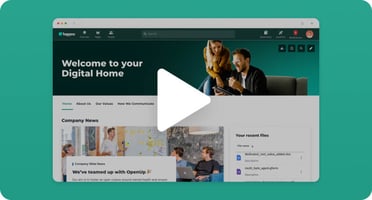
This modern intranet homepage puts a large, prominent search bar front and centre-mirroring the consumer search experience employees already expect. Below the search bar, you'll find a compact "Top tools" app launcher, the latest company news, quick access to the employee handbook, and an "Ask HR / Ask IT" entry point.
This layout works especially well for knowledge-heavy organisations in finance, manufacturing, or healthcare, where employees search for policies, procedures, and forms constantly. Three out of four employees search for forms and templates, so making findability the homepage's core purpose directly reduces support tickets.
The visual style stays clean and low-clutter: two to three columns, clear labels, and layouts optimised for both desktop and mobile access. Personalized content increases intranet engagement here because the search results and quick links adapt based on the user's role and location.
Example 2: Culture and internal communications homepage
This company homepage centres on storytelling and alignment. A hero news story anchors the top, followed by leadership updates, an internal comms "newsroom" feed, and a section for employee stories that highlight what teams are doing across the organisation.
Social intranet designs mimic social media to enhance employee engagement, and this example leans into that approach. You'll see prominent areas for employee recognition and shout-outs, a right-hand column for upcoming events, town hall recordings, and employee surveys that support two-way communication.
This style suits organisations going through change-mergers, rebranding, or rapid growth-where alignment and message reach are top priorities. Dynamic content delivery provides users with relevant news based on their role, so a warehouse team member in Berlin doesn't get the same hero story as a product manager in London.
Example 3: Frontline-friendly, mobile-first homepage
This essential homepage is designed for frontline workers who access the intranet on mobile devices, often in short bursts during breaks or between tasks. Instead of dense text blocks, it uses large tap-friendly tiles for rota information, safety alerts, shift swaps, and key apps.
At the top, clear "Urgent alerts" styling surfaces safety bulletins-critical in healthcare, logistics, or construction. Login minimises friction through SSO, QR codes, or magic links, removing the corporate-email barrier that excludes many deskless staff.
User-centric mobile design boosts engagement and supports remote work, and this example proves that modern intranet solutions can serve the shop floor and the field site, not just the office.
HR intranet and people hub examples
HR pages are consistently among the top three most-visited company intranet pages. Employees come looking for payslips, benefits information, time-off balances, and policy details. Three out of four employees search for forms and policies on intranets, so these pages deserve careful design.
Great HR intranet examples reduce repetitive questions by turning policies, FAQs, and forms into employee self service journeys. Below are three sub-examples: a benefits and payroll hub, a living employee handbook, and an onboarding space for new employees.
Example 4: Benefits, payroll, and leave self-service hub
This HR hub centralises everyday tasks on a single intranet page: view payslips, request time off, update personal data, and download tax forms. The layout opens with a short hero intro explaining what's available, then breaks into visual cards: "Pay & rewards", "Time off", "Health & benefits", and "Life events".
Integration capabilities allow intranets to work seamlessly with daily tools, so each card links directly to external HR systems via clear buttons rather than long link lists. This reduces cognitive overload and keeps the experience focused on self service access.
At the bottom, a discreet "Still need help?" callout links to HR contact options, and a tiny pulse survey asks "Did you find what you needed?" to capture real-time feedback. The measurable outcome: fewer basic HR tickets, higher satisfaction in HR service surveys, and better clarity on benefits usage.
Example 5: Employee handbook as a living intranet space
Instead of a static PDF buried in a shared drive, a modern intranet hosts the employee handbook as a structured, versioned page collection. Navigation uses a clear table of contents-"How we work", "Compensation", "Time off and flexibility", "Security & compliance"-with search scoped to handbook content.
Policies that change often get visual callouts with "last updated" dates to build trust. Short explainer videos or micro-guides help with complex topics like parental leave or hybrid work guidelines.
The design stays text-first but readable: short paragraphs, headings, and accordions that prioritise clarity over decoration. This approach turns institutional knowledge into something employees actually use, rather than something they email HR about.
Example 6: Onboarding hub for the first 90 days
A dedicated onboarding space greets each new hire on day one, accessible from the intranet homepage and the welcome email. Content blocks include a welcome message from leadership, a "Week 1" checklist, role-specific resources, and introductions to key tools.
A people-focused area shows team org charts, photo tiles of key contacts, and links to social channels for new joiners. Embedded employee surveys at key milestones-end of week one, day 30, day 90-help improve the onboarding process over time.
A well-designed onboarding page can reduce new hire confusion, and intranets improve employee onboarding efficiency by 40%.
Department hub examples: making teams findable
Department hubs turn the intranet from a static intranet site into a map of how work actually happens. The strongest examples focus on what colleagues need from that team-services, status updates, key contacts-rather than internal org charts.
Employee directories are among the top three most-used intranet resources. Searchable directories simplify collaboration by highlighting employee skills, so each hub should make it easy to find the right person, not just the right document.
Consistent intranet templates across department hubs keep the corporate intranet coherent as it grows. Below are three sample hubs.
Example 7: IT self-service and support hub
This service-centred IT page prioritises "Fix it yourself" before escalation. The top of the page surfaces FAQs, how-to guides, and step-by-step troubleshooting for the most common issues.
Key modules include:
- "Report an issue" form
- Service request catalogue
- System status widget
- Security awareness content
Self-service articles and quick actions sit at the top; IT team contact details appear further down. Analytics from this intranet page inform which guides to improve, based on what intranet users search for or where they drop off. This design reduces email threads and support tickets by putting tasks-not org structure-at the centre.
Example 8: People & Culture / HR team hub
This hub is the "backstage" view of HR: projects, programmes, and ways to get involved beyond core processes. Sections cover internal mobility (open roles, referral programme), a learning management system for development opportunities, and culture initiatives.
A dedicated space aggregates employee recognition programs-monthly award nominations and peer shout-outs from across the intranet. Employee recognition programs on intranets enhance workplace culture by making appreciation visible and consistent.
A small dashboard of HR KPIs (engagement scores, learning completion, headcount trends) connects comms to outcomes. The layout stays simple and human: photos, short project cards, employee profiles, and clear calls to action instead of dense policy text.
Example 9: Sales / Operations hub with live tools
This function-specific hub pulls together playbooks, KPIs, and tools in one place. Blocks include "Today's priorities", current targets, top resources, and quick links to CRM or operational systems.
Personalized dashboards improve employee engagement and productivity, so embedding live dashboards from BI tools lets teams see real numbers without leaving the intranet. A best-practice library and success stories encourage employees to share knowledge across regions.
Knowledge base and document centre examples
Many intranets fail by becoming document dumping grounds-thousands of files with no structure, no owners, and no way to find anything. A good intranet knowledge base has categories, metadata, powerful search, and clear ownership.
A robust search function is essential for finding documents quickly. Centralized access to knowledge and documents establishes a single source of truth, which is particularly important for organisations with remote employees working across time zones.
AI-powered search in effective intranet software can make these spaces far more usable by surfacing contextually relevant content. Governance and security in intranets include controlled permissions and data encryption, ensuring sensitive documents remain accessible only to the right people.
Example 10: Central policy and compliance library
This policy hub is where all official documents live, tagged by topic, region, and effective date. Top-level filters (HR, IT, Legal, Safety) sit alongside search that recognises common phrases employees use-not just formal policy titles.
A "What changed recently" panel supports change management and regulatory updates. Each policy displays an owner and review date to keep content current. Flexible taxonomy by role, location, and topic, with workflow automation and compliance tracking are all relevant to this type of library.
The result is risk reduction: easier policy access improves compliance and eliminates "I couldn't find the policy" incidents. Document management becomes a governed process rather than an afterthought.
Example 11: How-to knowledge base for everyday tasks
This task-focused knowledge base contains short articles and checklists for recurring questions: "How to expense a trip", "How to request equipment", "How to set up VPN access".
Each article follows a consistent template:
- Purpose: What this guide covers
- Steps: Numbered instructions with screenshots
- Related links: Connected policies or forms
- Feedback: "Was this helpful?" micro-feedback at the bottom
Highly rated answers surface at the top. AI search can answer natural language queries-"how do I submit expenses?"-and point employees to the right article or owner. This approach reduces interruptions and supports self service access across time zones, turning knowledge sharing into a scalable habit rather than a bottleneck.
Example 12: Project or product documentation hub
This intranet space centralises specs, roadmaps, decisions, and FAQs for a major project or product line. Tagging by version, release date, and audience (Sales, Support, Engineering) makes content discoverable without custom development.
A decision log and "What's coming next" section reduce misalignment and repeated questions. Connecting the hub to project chats or channels ensures knowledge doesn't stay locked in conversation tools.
Internal communications and culture pages
Intranets have evolved from static news boards into interactive internal communications platforms. Comms teams now use them as a single source of truth for campaigns, leader updates, and crisis response.
Interactive communication features like news centers foster a sense of community. A well-designed intranet can reduce email communication by 28%, replacing all-staff email blasts with targeted, measurable channels. Intranets can improve employee engagement and productivity significantly when two-way communication-comments, reactions, polls, and employee stories-is built into the experience.
Example 13: Newsroom-style internal comms hub
A central internal news page uses an editorial layout: hero story, secondary stories, topic filters, and archives. Content is targeted by location, role, and language so different employee groups only see relevant updates.
Features like read receipts, engagement analytics, and featured tags for change programmes give comms teams visibility into what's landing and what's being missed. This replaces the "send to all" email culture with a trusted, trackable internal communications channel.
Example 14: Event centre and town hall hub
This intranet page is dedicated to company events: all-hands meetings, learning sessions, social events, and local gatherings. A company calendar helps track important events in one place, with filters by location and event type. A company calendar on an intranet keeps teams informed about important events without relying on email chains.
Key elements include event cards, sign-up forms, and integration with Outlook or Google calendars. Recordings and highlight reels from past town halls let remote employees catch up asynchronously. Quick post-event polls capture sentiment and surface questions that weren't addressed live.
This example shows how intranets foster shared moments for distributed teams, turning one-time events into ongoing engagement opportunities.
Example 15: Culture, recognition, and community page
This is a space employees interact with because they want to, not because they have to. It features recognition walls, employee stories, work anniversary highlights, and profiles of different teams or locations.
Recognition tied to company values-tags for each value like "Innovation" or "Customer first"-reinforces company culture in a tangible way. A social feed format works well here, and mobile-friendly design ensures frontline workers can participate on the go.
This example illustrates how intranets strengthen belonging and retention. When an organization's employees see their peers being celebrated and their stories shared, the intranet becomes something worth opening-not just another tool to check.
Frontline intranet examples: beyond the desk
Most of the global workforce is deskless, yet many intranets still assume a laptop-and-email user. Intranets should be mobile-responsive for deskless workers, and mobile-friendly intranets improve access for frontline workers who may never sit at a desktop.
Design principles for frontline and remote workers include mobile-first layouts, minimal typing, offline tolerance, and clear communication patterns. Authentication choices-no-email login, SSO, QR codes-reduce barriers to intranet adoption. Frontline intranet design is a core inclusion and safety topic, not just a UX detail.
Example 16: Retail intranet for distributed stores
This mobile app-like intranet homepage uses bold, image-led tiles for the daily briefing, current promotions, store procedures, and recognition. Targeted updates by location ensure each store sees only relevant campaigns and operational guidance.
Micro-learning modules for new collections and visual merchandising are accessible between customer interactions. A light-weight recognition feed lets managers highlight great customer feedback and team achievements. The visual design is optimised for quick glances rather than long reading sessions.
Example 17: Logistics or field services operations hub
This frontline intranet example serves drivers, field technicians, and operations staff who need route information, incident procedures, and safety protocols while on the move. Offline-friendly features like cached procedures and contact lists work when network coverage drops.
Clear "Report an incident" and "Safety alert" entry points use large buttons and minimal form fields. Integration with scheduling tools and map apps reduces app-switching during busy shifts. The outcome: reduced safety incidents and quicker response times during disruptions.
Using intranet templates and patterns to move faster
Intranet templates are pre-defined page layouts and components for common use cases. They help internal comms, HR, and IT teams avoid designing each page from scratch while maintaining governance across the entire digital workplace.
Happeo understands the blank-page paralysis, and offers templates for a wide range of use cases to get started. Coupled it its AI, it can generate and adapt these layouts based on organisational context and content. Treat templates as starting points that evolve with analytics and feedback-not rigid moulds.
How to choose the right intranet examples for your organisation
Copying a "beautiful" intranet example without aligning it to your workforce is a common pitfall. A user friendly intranet is one that solves problems your employees actually have. Intuitive navigation in intranets should avoid corporate jargon for user-friendliness-label things the way people think, not the way the org chart reads.
Start by mapping examples to employee personas: new hires, frontline workers, managers, executives, and subject-matter experts. Run quick employee surveys and interviews to rank which company intranet examples solve the biggest pain first-whether that's an HR hub, a knowledge base, or a better homepage.
Your internal communication goals, change initiatives, and company culture priorities should guide which examples you tackle in phase one. Document a simple roadmap: which intranet pages to build in the first 90 days and which to add once employees access the new intranet consistently and adoption is strong.
A good rule of thumb: build for the tasks employees do daily before building for the content leaders want to publish.
From examples to execution: practical steps to build your intranet
Going from inspiration to a working new company intranet follows a clear pattern:
- Clarify goals. What should the intranet solve? Fewer HR tickets? Better frontline communication? Faster onboarding?
- Pick 3–5 critical page types. Start with the best intranet homepages pattern, an HR hub, and one department hub.
- Pilot with a specific group. Launch to one team or location, gather feedback, iterate.
- Measure from day one. Track time on page, search success rates, click paths, and satisfaction to see which layouts perform best.
- Assign content owners. Every major hub needs a named owner to prevent content decay.
As the intranet evolves, AI-powered intranet software like Happeo personalises feeds, improves search, and automates routine publishing-keeping the experience fresh without constant manual effort. The best intranet examples in this article aren't destinations. They're starting points.
Pick one area that solves your biggest pain point, build it well, and measure what happens. That's how a functional intranet becomes a great company intranet.
FAQ: Intranet examples and design decisions
How many intranet pages do we actually need to start?
Most organisations launch effectively with a focused set: an intranet homepage, HR hub, IT support page, a knowledge base starter, and two to three priority department hubs. It's better to have a small number of well-maintained, high-traffic pages than a large, fragmented new intranet with stale content. Add new hubs only when there's a clear owner, a defined audience, and measurable goals.
Should we design our intranet around departments or around tasks?
Real-world intranet design examples show that task- and journey-based design works better than strict org-chart navigation. A hybrid approach is most effective: high-level navigation by tasks ("Get help", "People & pay", "Policies", "Teams") with department hubs discoverable inside. Analytics and search logs should guide how navigation evolves-let employee behaviour shape the structure, not assumptions.
How often should we refresh our intranet homepage layout?
Avoid constant redesign. A structural review roughly once a year works well, with smaller tweaks quarterly based on data. News, campaigns, and hero content should change far more frequently than the overall layout. Consistency matters for intranet adoption-employees need predictable entry points for daily tasks, and changing the modern intranet design too often creates confusion.
What's the best way to involve employees in intranet design?
Run short discovery sessions or surveys to understand what's difficult about the current sharepoint intranet solution or sharepoint site and which best intranet examples resonate. Pilot new intranet templates with a few teams, then iterate based on feedback and usage data. Involving frontline workers and new employees is especially valuable-they experience friction most acutely and can encourage employees across the organisation to adopt the new experience.
How do intranet examples differ for small vs. large enterprises?
The core company intranet pages are the same, but large enterprises need more advanced targeting across different employee groups, stricter governance, and deeper integration patterns. Smaller organisations can move faster, adopting simpler intranet design best practices and lighter governance. In both cases, the best intranet examples clearly support employee experience and business outcomes-not just follow modern intranet design trends. Whether you're connecting 200 people or 200,000, the goal is keeping employees connected to the information, people, and tools that matter most.
Want to lean how Happeo can help you build your intranet from the ground up in a matter of weeks? Book a consultation today.
