







CMS Intranet: Definition, Benefits, and How To Choose the Right Platform




Sophia Yaziji
14 mins read
A CMS intranet is the engine behind how your organisation manages content, shares knowledge, and keeps employees aligned, whether they sit in the same building or across continents. But not all intranets are built for the same job. This guide breaks down what a CMS intranet actually is, why it matters for employee experience, and how to pick the right one for your organisation.
Key Takeaways
- A CMS intranet is a content management system built for internal networks, not public websites. It helps organisations create, manage, and distribute digital content to employees from a central hub.
- Modern CMS intranets power internal communications, knowledge sharing, and the overall employee experience for distributed workforces, going far beyond static page publishing.
- The "front door" role of a CMS intranet helps new employees, remote teams, and leaders stay aligned on goals, corporate news, and critical updates across time zones.
- Not all CMS intranets solve the same problem. Some are built primarily around engagement and reach, social feeds, recognition, campaign analytics. Others, like Happeo, are built primarily as knowledge management intranets, where AI-powered search and findability come first and communication features sit on top. Worth knowing which gap you're actually trying to close before you shortlist platforms.
- The rest of this article explains how CMS intranets work, key use cases, and how to choose the right system for your company.
What Is a CMS Intranet?
A CMS intranet is an internal content management system that sits on a private company network or secure cloud environment, used exclusively by employees. It allows creation, management, and distribution of digital content, from HR policies and onboarding guides to leadership updates and team resources.
The difference from a traditional web CMS, like WordPress or Drupal, is focus. A marketing CMS powers a public website. A CMS intranet manages internal documents, corporate news, team spaces, and employee-facing resources, with permissions, search, and collaboration built in.
Think of a global consulting firm using its intranet to publish quarterly strategy updates and localised office announcements. Or consider how large, multi-site public-sector organisations, school districts in particular, rely on CMS intranets to connect staff across dozens of locations with consistent communication and resources.
CMS intranets evolved from static HTML pages in the 90s. By the mid-2000s, intranets included social features like comments and profiles. Today, cloud delivery has become the default for CMS intranet platforms, and most digital workplaces expect search, permissions, and collaboration tools by default rather than as add-ons. Analyst reports like ClearBox's annual intranet vendor comparisons, which evaluate dozens of platforms each year, consistently confirm that these capabilities are now baseline rather than differentiators.
Why a CMS Intranet Matters for Internal Communications
A CMS intranet isn't just IT infrastructure. For many organisations it's also a communication strategy tool. Internal communications teams use it to publish company news, leadership updates, town hall recaps, and crisis communication from a single source of truth.
Targeted communication tools filter news based on employee attributes like department, location, or role, so a policy change can reach thousands of hybrid employees across multiple time zones without flooding everyone's inbox. Industry surveys on internal comms priorities consistently rank the intranet near the top of where IC teams plan to invest time and budget, often ahead of email and video specifically.
The outcomes: fewer missed updates, clearer accountability, and better alignment with organisational objectives. Worth flagging, though: how much of that is genuinely a communications win versus a findability win depends on the platform. A comms-first intranet helps content reach people. A knowledge-management-first intranet helps people find it again later. Both matter, but they're not quite the same job.
CMS Intranet vs. Knowledge Base vs. "Plain" Intranet vs. Knowledge Management Intranet
Many leaders confuse these. Here's a quick comparison:
- Knowledge base: static how-to content and FAQs, usually owned by a small expert group. Search is often siloed and collaboration features are limited.
- "Plain" intranet: basic pages and links with limited governance or interaction. Runs the risk of becoming outdated quickly because there are no workflows or analytics.
- CMS intranet: dynamic, searchable, collaborative hub combining content, people, and communication. Supports decentralised content creation, which reduces reliance on IT for publishing.
- Knowledge management intranet: a CMS intranet where the priority is explicitly findability and governance over reach. Happeo is built this way: AI-powered search across the intranet and connected tools (combining Gemini with Happeo's own proprietary AI layer), structured content ownership, and review cycles, with engagement features supporting that goal rather than driving it.
For example, a product team might document feature releases in a knowledge base space that's then surfaced through the intranet homepage and a personalised news feed. CMS intranets crowdsource content from teams with clear workflows and approvals, rather than relying on one central keeper of information.
Most mid-sized and enterprise organisations eventually need a modern CMS intranet rather than a simple wiki or file share. Which flavour of CMS intranet, comms-first or knowledge-management-first, depends on which problem is actually costing you time.
Is an Intranet Itself a Content Management System?
An intranet is the internal "place," the network and the experience. A CMS is the engine that manages content within that place. Modern intranets almost always embed CMS capabilities: page templates, version history, permissions, and publishing workflows.
Some older intranets were custom-coded with no proper CMS layer, making them hard to maintain and completely dependent on IT. CMS intranets now focus on user experience and customisation. Headless CMS options allow flexible frameworks for developers while managing content easily on the backend.
AI-powered platforms like Happeo combine CMS and knowledge management capabilities in one digital workplace hub, built around findability first rather than broadcast communication, with AI-powered search layered on top to surface the right content, person, or page regardless of which tool it actually lives in. The takeaway: evaluate the CMS capabilities of your intranet, not just the visual design, and be clear about whether "capabilities" means reach or findability for your use case.
Core Benefits of a CMS Intranet
The benefits of a CMS intranet are best understood through the lens of employee experience, internal communications, and operational efficiency, not technology specs. CMS intranets improve collaboration and communication among employees while streamlining internal processes by automating routine tasks.
Here are the concrete benefits that matter most:
- Better document control with version tracking and permissions
- Faster onboarding for new employees
- Stronger company culture and engagement (for comms-first platforms especially)
- Reduced email overload, since updates and policies live in one findable place instead of inbox threads
- Consistent messaging across locations and teams
- Improved searchability of policies, templates, and resources
For distributed and hybrid teams who rely on digital channels instead of office noticeboards, these benefits aren't nice-to-haves, they're essential.
Document Control, Governance, and Compliance
Version control and permissions matter deeply for HR, Legal, and IT teams. CMS intranets provide better document control with version tracking so employees always see the current version of codes of conduct, security policies, and benefits guides.
Role-based permissions determine who can view, edit, or publish documents. Payroll data stays restricted to HR and Finance. IT runbooks stay with the operations team. Granular permissions and audit trails support security and compliance, and administrators can assign roles to control content access with precision.
Content management systems help prevent outdated information through review workflows and automated reminders. Platforms differ in how seriously they take this: Happeo, for example, builds governance, content ownership, and review-cycle tooling directly into the platform rather than relying on generic file-storage permissions inherited from wherever the content originally lived.
When evaluating CMS intranet tools, look for auto-review dates, expiry reminders, and structured ownership fields as standard, not as an add-on module.
Employee Engagement and Culture
Intranets can either become "dead portals" or active, well-used hubs. For comms-first platforms, the difference often comes down to social features: comments, reactions, @mentions, social feeds, and recognition spaces. These platforms support content types like videos and polls, so internal communications managers can run campaigns, diversity month stories, wellness weeks, innovation challenges, directly on the platform.
AI-assisted content recommendations can surface relevant information and communities to employees based on their role, preferences, and interests. Organisations that lean into this well-typically report higher participation and a stronger sense of belonging, though attributing attrition specifically to intranet engagement features is harder to isolate from everything else going on in a workplace.
Operational Efficiency and Reduced Friction
Employees lose real time each week hunting for documents or answers. CMS intranets, especially knowledge-management-first ones, increase productivity by centralising policies, templates, and tools in one findable place with strong search on top.
A new project manager can find the latest project charter template, approval workflow, and branding guidelines in minutes instead of asking three different people. CMS intranets can integrate with internal and external tools to streamline this further, Google Workspace, Microsoft 365, HRIS, ticketing systems. Workflow automation through approval processes and publishing reminders cuts context-switching and duplicate data entry. The general pattern across organisations adopting modern intranets is meaningfully faster information access and a shorter onboarding ramp, though the exact size of the gain depends heavily on how disorganised things were beforehand.
How a CMS Intranet Works in Practice
Content flows through a clear lifecycle: creation, approval, publication, consumption, feedback, update. Typical user roles include intranet owners, content owners, approvers, everyday contributors, and standard employees who consume and interact with content.
Modern CMS intranets are accessible on mobile devices for remote or hybrid workforces.
They run in the cloud, accessible via browser and mobile app, with secure authentication like SSO and MFA. CMS intranets provide analytics for tracking engagement, giving internal communications and HR teams data on reach for every piece of content, and giving knowledge owners data on what's actually being searched for and found.
Key CMS Intranet Functionalities
Here are the non-negotiable features any modern intranet CMS should include:
- Page and news publishing with templates
- Rich media support (video, images, embeds)
- Advanced search and filters
- Employee directory with profiles and org chart
- Spaces or channels for departments and projects
No-code visual editors let non-technical staff in HR, Comms, and Operations create and update pages without touching HTML, which reduces dependency on IT for routine publishing.
Governance tools include approval workflows, content ownership, scheduled publishing and expiry, and content lifecycle rules. Scheduling and expiry features help keep a portal current without constant manual upkeep. AI capabilities like suggested content, automated tagging, and prompts to review outdated pages round out the feature set.
Personalisation, Targeting, and AI
Different roles need different information. A generic homepage rarely works at scale. CMS intranets can personalise the homepage by location, role, language, and organisational unit, so one office sees different content than another.
AI-driven features include personalised newsfeeds, recommended communities, search that understands intent rather than just keywords, and auto-summaries of long posts. AI can also assist content owners by suggesting titles, tagging content, and flagging what needs review based on usage data.
Transparency and guardrails matter when introducing AI-powered features into an intranet. The strongest platforms embed AI deeply into search and content management, but pair it with clear governance over what data the AI can draw from, and how its outputs get validated before employees rely on them.
Key Use Cases for CMS Intranets
CMS intranets serve as centralised platforms across the employee lifecycle: onboarding, learning, collaboration, and leadership communication. Here are practical examples that internal communications, HR, and IT leaders will recognise.
The Intranet as the "Front Door" to the Digital Workplace
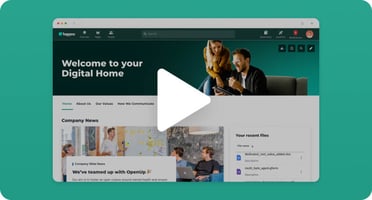
The intranet homepage is where an employee's day begins, especially in hybrid or remote setups. Typical front door elements include corporate news, quick links to HR systems, upcoming events, a search bar, and personalised shortcuts.
A large school district might use this page to highlight weather closures and critical IT alerts. An enterprise might surface leadership messages and project deadlines. Integrations with calendars, chat tools, and ticketing help turn the homepage into an actionable dashboard rather than a static bulletin board. Prioritise clarity, scannability, and mobile responsiveness on this entry point.
Onboarding New Employees and Internal Mobility
A CMS intranet shapes the first 30 to 90 days of a new employee's experience. Structured onboarding hubs include checklists, welcome messages from leaders, mandatory training, and "first-week" FAQs, all personalised by role.
This extends to internal mobility: employees moving into new roles can access updated learning plans and team-specific information. The outcome is faster time to productivity and fewer one-off questions to HR or managers, provided the underlying content is actually findable, not just present somewhere on the platform.
Ongoing Training and Career Development
CMS intranets can host or surface learning resources including video libraries, self-paced courses, and links to external LMS platforms. Learning hubs by role, career-path guides, and stories from employees who progressed internally help build a culture of continuous education.
A teacher or customer service agent can find updated curriculum or product training modules via intranet search. Light-touch analytics show HR and L&D teams which training topics get the most visits and completions.
Collaboration and Cross-Team Work
The intranet complements, rather than replaces, tools like Slack, Teams, or email. Departmental spaces store plans, retrospectives, and shared documentation, all governed by the CMS. Project spaces gather timelines, decisions, links to shared drives, and meeting notes for cross-functional work like product launches or district-wide initiatives.
Including "how we work" playbooks on the intranet helps standardise collaboration practices across offices and projects, and gives that documentation a real chance of being found again months later.
Strengthening Culture, Recognition, and Employee Voice
Culture work needs more than occasional all-hands meetings, especially in distributed environments. Use the intranet for recognition walls, shout-outs, peer-nominated awards, and sharing success stories. Pulse surveys and feedback widgets let employees share sentiment on key topics directly within the intranet.
An internal communications manager might run quarterly engagement surveys and publish key takeaways and actions in a dedicated space. This is squarely a comms-first use case; if it's the primary thing you need, weight your evaluation toward platforms built for it.
Types of CMS Intranets and How to Choose
Three main categories exist: cloud-based SaaS intranets, intranets built on Microsoft SharePoint or similar, and open-source or custom-built solutions. One platform can fall into multiple categories.
Most organisations in 2026 prefer cloud-based, AI-ready platforms because of regular updates and lower maintenance overhead. Public institutions like large school districts may have specific procurement, data residency, and accessibility requirements. Focus on matching the type to your priorities: speed of deployment, governance, security, and user interface quality.
Org size matters too. A platform built primarily for enterprises with tens of thousands of users makes different trade-offs than one built for a leaner organisation.
Pros and Cons of Common CMS Intranet Approaches
Cloud-based SaaS:
- Pros: fast rollout, continuous updates, strong UX, AI features.
- Cons: ongoing subscription costs, dependency on vendor roadmap.
SharePoint-based or similar:
- Pros: fits well in Microsoft ecosystems, strong document management.
- Cons: can feel complex, often requires heavy configuration and training.
Open-source / custom:
- Pros: deep control, can meet highly specific requirements.
- Cons: higher internal maintenance, risk of becoming outdated or hard to support.
Prioritise employee adoption and content governance over pure feature checklists when evaluating options. The best software is the one your workforce will actually use, for the problem you actually have.
Best Practices for Successful CMS Intranet Implementation
Implementation is an organisational change project, not just a software rollout. Build a cross-functional project team: internal communications, HR, IT, and representatives from key business units.
Key practices:
- Define clear objectives tied to communication and employee experience goals
- Conduct user research on devices, content needs, and pain points
- Conduct a content audit to identify useful and redundant content before migration
- Implement a comprehensive content strategy to engage employees from day one
- Set clear roles and responsibilities for intranet governance through a governance model
- Run pilot groups and iterate before wider launch
Treat the launch as an internal campaign, with teasers, training, and leadership sponsorship. Define success metrics early: adoption rates, search success, reduced email volume, or engagement scores, whichever maps to the problem you set out to solve.
Content Governance and Lifecycle
Without governance, your intranet becomes a content graveyard. Assign content owners for each key area (HR, IT, Finance, Operations) with clear expectations and review cycles.
Use the CMS's built-in features to set review dates, expirations, and ownership fields for every critical page. For example, HR policies reviewed every 12 months; IT how-to guides reviewed every 6 months. Use analytics to measure engagement and content effectiveness, and document the rules in a simple intranet governance guide that content creators can follow without guesswork.
Driving Adoption and Continuous Improvement
Adoption is a journey, not a one-time event. Tactics that work:
- Executive sponsorship and visible leadership usage
- Local champions in each department or location
- Short how-to videos and embedded intranet links in daily workflows
- Regular feedback loops via quick polls or focus groups
Use analytics to spot underused areas, top search terms with poor results, and content that needs updating. Continuous evaluation keeps the intranet relevant as your organisation evolves.
Seven CMS Intranet Features to Prioritise in 2026
This checklist goes beyond "nice to haves." Each feature directly influences whether employees actually use the platform, and whether internal communications, HR, and IT teams can do their jobs effectively.
- User-friendly editing and publishing. Content owners in HR, Comms, and Operations need simple, no-code tools to create pages, not complex HTML editors. Look for drag-and-drop layouts, reusable templates, inline editing, and preview modes for desktop and mobile. Most contributors should feel confident after a short session.
- Powerful, intuitive search. If employees cannot find what they need, the intranet has failed at its core job. Look for federated search across pages, documents, people, and integrated tools, with ranking, synonyms, and typo tolerance. Search analytics reveal what employees look for and where results are weak, for example, identifying that "travel policy" is a top search term and making it a homepage quick link.
- Personalised homepages and news feeds. Personalisation prevents information overload. Personalise by team, role, location, language, and interests. This supports multi-brand or multi-campus organisations with different local needs. Test personalisation rules before launch to avoid gaps.
- Deep integrations with daily tools. Reducing context-switching matters. Look for connections to Google Workspace, Microsoft 365, HR systems, ticketing tools, learning platforms, and chat tools, plus SSO and automated user provisioning. Ask vendors how easy it is to integrate new tools as your tech stack evolves.
- Mobile-optimised experience. Many frontline workers and educators access intranets primarily via mobile devices, not desktops. Expect responsive design, fast loading, offline-read options, and push notifications for critical updates. A poor mobile experience leads to unofficial messaging groups and shadow IT filling the gap.
- Analytics and reporting for internal communications. Data helps internal comms and HR teams prove impact and make informed decisions. Key metrics include unique visitors, time on page, reach by location or team, search terms, and engagement actions. Segment-level reporting helps you understand whether new employees, managers, or specific locations are under-informed.
- Security, permissions, and accessibility. Intranets contain sensitive content, so security cannot be an afterthought. Basics include SSO, MFA, role-based permissions, encryption in transit and at rest, password policies, and reliable uptime. Accessibility standards like WCAG 2.1 matter for inclusive workplaces and are often a hard requirement for public institutions. Involve IT and legal early to validate vendor certifications and data handling practices.
FAQ
Who should own the CMS intranet: IT, HR, or Internal Communications?
Strategic ownership typically sits with Internal Communications or a Digital Workplace team, with HR and IT as key partners. Internal Communications leads content strategy and governance. HR owns people-related spaces like benefits and onboarding. IT manages security, integrations, and technical support. Form a steering group with representatives from major business units to align priorities. Having a clear "product owner" prevents the intranet from becoming a neglected side project. Where the platform is knowledge-management-first rather than comms-first, it's also worth giving whoever owns content governance, not just communications, a real seat at that table.
How long does it usually take to implement a modern CMS intranet?
Typical timelines run from around 8 to 12 weeks for a focused rollout in a mid-sized organisation, up to 3 to 6 months for large, complex enterprises. Phases include discovery and design, content audit and migration, configuration and integrations, pilot, and wider launch. Timelines depend heavily on content readiness and decision-making speed, not just technology setup. Start with a minimum viable intranet and iterate rather than waiting for perfection.
How do we measure whether our CMS intranet is successful?
Track adoption (logins and active users), search success rates, content reach, and satisfaction scores. Tie metrics to specific goals, like reducing email newsletters, improving onboarding satisfaction, or increasing policy acknowledgement rates. For example, you might aim to have 80% of new employees complete their onboarding checklist via the intranet within the first 30 days. Review metrics monthly and adjust accordingly.
What content should we migrate from our old intranet or shared drives?
Don't lift and shift everything. Run a content audit to identify what's current, duplicated, or obsolete. Prioritise must-have content: HR policies, IT help, key forms, compliance information, leadership messages, and team homepages. Archive low-traffic or outdated content and only migrate it if a clear owner and purpose exist. Migration is a good moment to simplify navigation using employee language rather than internal jargon.
How does a CMS intranet support organisations like school districts or public agencies?
Multi-site public-sector organisations, large school districts in particular, use intranets to communicate with thousands of staff across campuses and offices. Public sector needs include policy transparency, consistent curriculum resources, crisis communication, and accessible design. Role-based spaces for principals, teachers, and operations staff keep information targeted. A modern CMS intranet improves coordination, reduces email overload, and supports professional development across the district.
Want to lean how Happeo can help you build your intranet from the ground up in a matter of weeks? Book a consultation today.
