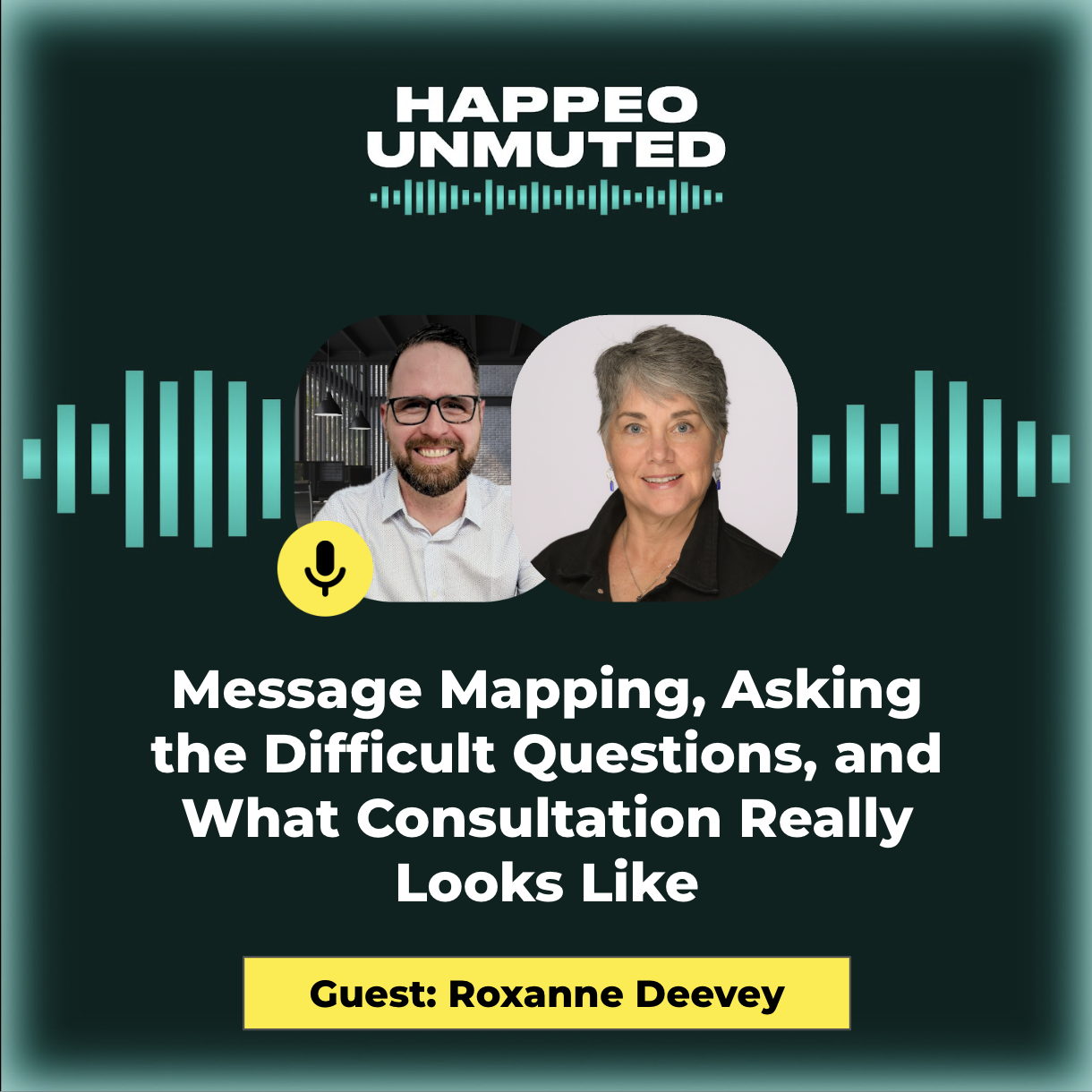








Happeo Unmuted, Episode 15: Messaging Mapping, Asking the Difficult Questions, and What Consultation Really Looks Like


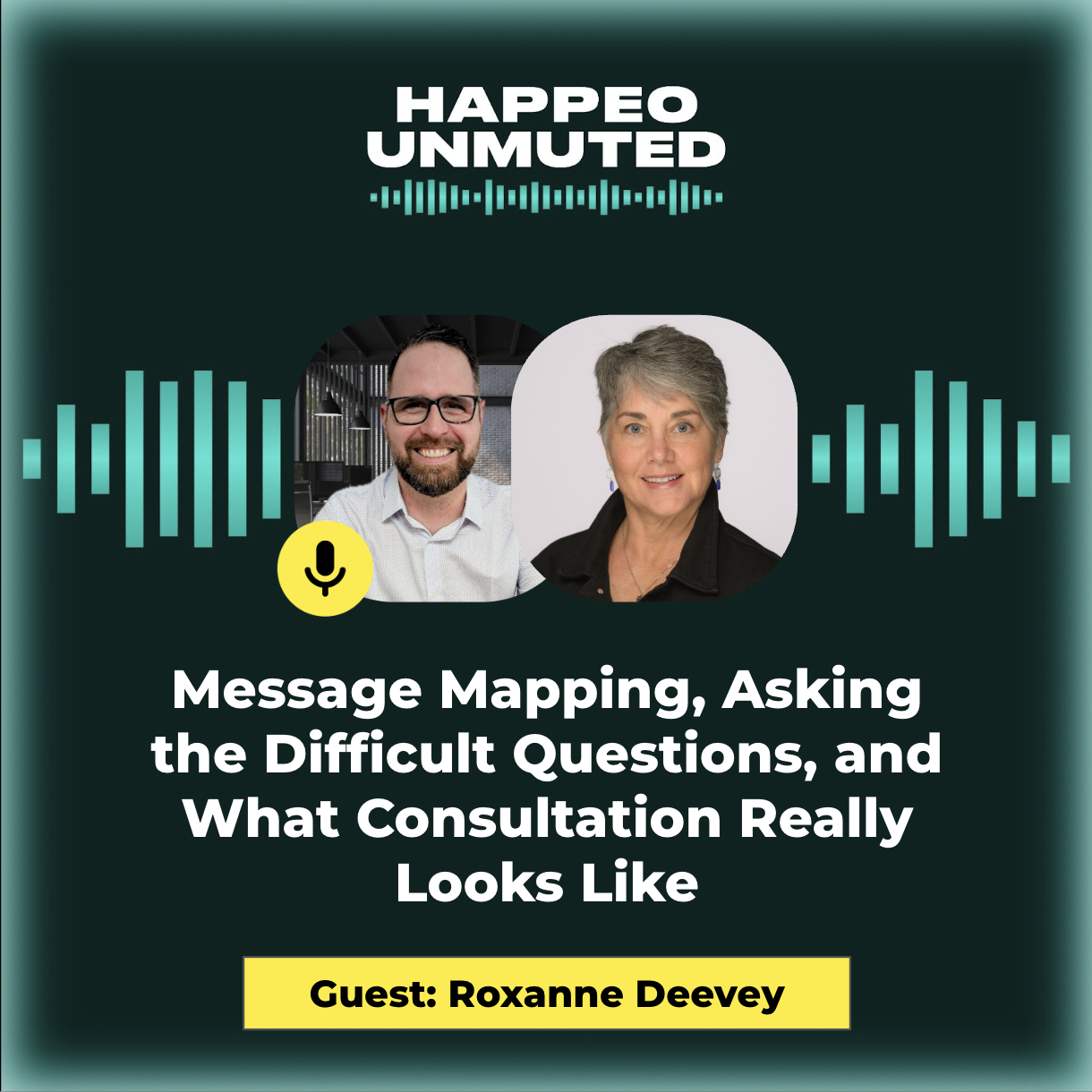
Welcome to Happeo Unmuted, the podcast where we go beyond best practices to explore what really connects people at work. In this episode, Jesse Bourgeault-Trickey sits down with Roxanne Deevey, owner and chief strategist of DB Strategic Communications and two-time Gold Quill award winner, to challenge how organizations think about internal communications — and why so much of what passes for good practice quietly undermines the work.
Top 5 takeaways from Roxanne Deevey on Happeo Unmuted:
1. Communications isn't a "nice to have", it's infrastructure, and budget season reveals whether leadership actually believes that. When comms gets cut because it's seen as non-core, it's a symptom of a deeper problem: the function was never properly embedded in organizational decision-making to begin with. The fix is being present before the conversation starts.
2. Your employees are not as interested in the executive team as the executive team thinks. Equating "we informed people" with "we communicated effectively" is one of the most persistent mistakes in internal comms. Good communicators put themselves in the audience's shoes and ask one question: what part of this is actually relevant to them?
3. Consultation that doesn't change anything isn't consultation. Running a town hall or a public meeting and calling it stakeholder engagement is disingenuous. Real consultation is two-way. It means taking feedback seriously, building on it, and, critically, circling back to tell people what came of the process. Without that last step, you're just manufacturing fatigue.
4. Plain language is the advice everyone agrees with and almost nobody follows. It sounds simple. It isn't. The moment a message goes through twelve rounds of approvals, the jargon creeps back in, the caveats multiply, and the clarity disappears. Plain language isn't dumbing things down. It's respecting the fact that your audience is already swimming in information.
5. The CEO is not automatically the right person for the interview. If they need to be spoon-fed context, or if someone else in the organization actually has the expertise, put that person in front of the camera instead. Defaulting to the corner office because of hierarchy and not because of relevance is a choice that costs you credibility with the audience.
If you’re an digital workplace or knowledge management expert and have something to share, we’d love to hear from you! Get in touch.